Tuesday's headache, Thursday morning's dizziness, the rash that showed up after the antibiotic. By the time you see a doctor the details are gone, and the answer to "since when?" and "how often?" is "about two weeks, I think". A symptom diary fixes exactly that: it records on the spot, with the time, and shows you the pattern.
What, where, how strong
The symptom, the spot on the body and the intensity from 1 to 10, in three taps.
How you feel right now
Energy, mood and sleep, so the context sits next to the symptoms.
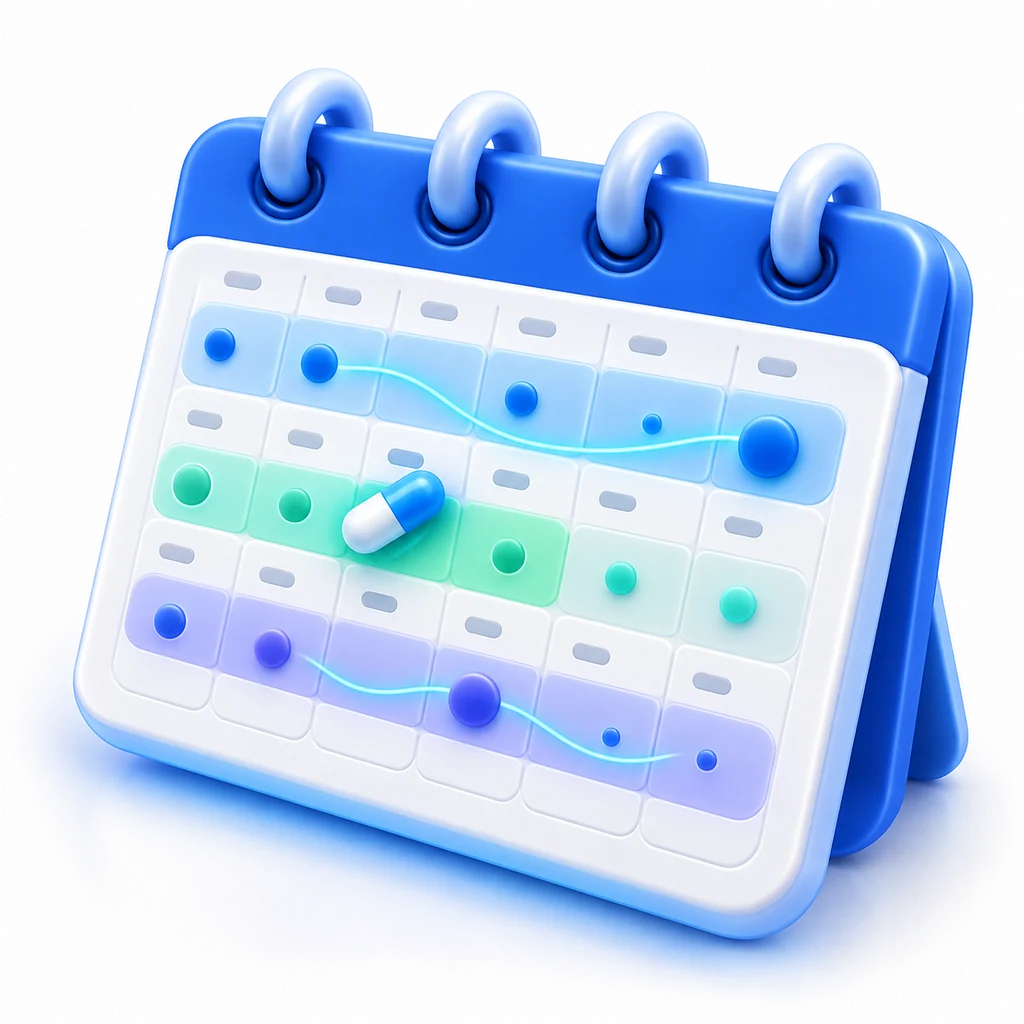
The course over days
A timeline with symptoms and medications, ready to show your doctor.
What you record
A symptom in Anpheros Daily has a few simple parts:
- What you feel: pick from the symptom list or write it in your own words. The app recognises the term and codes it behind the scenes, so your doctor sees it in their language.
- Where: tap the spot on the body outline. For pain, rashes and swelling, the place matters.
- How strong: intensity from 1 to 10 on a slider. A few days later, that number is what says whether it is getting better or worse.
- What it is like: throbbing, burning, dull, stabbing. The words the doctor asks about anyway.
- A photo, if it is something visible: a rash, a swelling, a red eye. Three days later you can see whether it spread or receded.
Alongside symptoms you can answer "How do you feel right now?" on three scales, energy, mood and sleep, with one tap each. It is optional, but next to the symptoms it gives the context.
What you see after a week
Every entry goes into the calendar and onto a timeline called "Trend". Symptoms appear there as bands across days, with the intensity for each day, and underneath them the medications you took. At a glance you see things that are hard to notice otherwise:
- the headache comes on the days after short nights;
- the bloating started two days after a new medication;
- the child's rash cleared in three days without treatment.
It is not a diagnosis, just your own data put in order. But it is exactly what the doctor is missing in a 15-minute appointment.
At the doctor
From the app you generate a PDF report with the symptoms from a period, together with measurements and medications, and show it or send it before the appointment. If your doctor is in the app, you can give them direct access to your record, with your consent, for a period you choose.
Symptoms are kept in your medical record in a standard format (HL7 FHIR, the one hospitals use), not in a notebook locked inside the app. You can export them at any time and they stay yours if you switch apps.
Who it helps
- Chronic pain, migraines, digestive problems: where the pattern matters more than any single episode.
- Starting a treatment: to tell side effects apart from the illness.
- Children: a parent notes the child's fever, rashes and cough on the child's profile, and the paediatrician sees the real course.
- Before a specialist appointment: when you are told to "keep a diary for two weeks".
- Pregnancy: nausea, pain, movements, week by week.
How to start
- Install the app on your phone, or open it in the browser on Mac and Windows.
- Create an account and pick your language. The app comes in 20 languages.
- Tap "+", write what you feel and save. The first entry takes a minute, the next ones under 20 seconds.
The Basic plan is free and includes the symptom diary with no limit. The AI assistant, which reads your diary and prepares your questions for the doctor, is in the Plus and Max plans.
Frequently asked questions
Can I keep the diary for a child or an elderly parent?
Yes. You add profiles for family members in the app and record symptoms on each person's profile. The data stays in your account, and if the person has their own account you can give them access to what you noted.
Does the app tell me what illness I have?
No. The diary records and organises what you note. The AI assistant in the Plus and Max plans can summarise the course and suggest questions for your doctor, but it does not diagnose. For any symptom that worries you, talk to a doctor; in an emergency call 112.
Can I add photos?
Yes. You can attach one or more photos to a symptom, for example a rash or a swelling. Photos are stored encrypted in your record, not in your phone's gallery.
What happens to my data?
It is stored in the European Union, in the standard HL7 FHIR format, and it is yours: export it as a PDF or in technical format, delete it with your account, show it to whoever you choose. Anpheros does not sell data and shows no ads.
Does it work without internet?
Recording works offline on the phone and syncs when the connection comes back.
How much does it cost?
The symptom diary is included in the free Basic plan, with no limit on entries. The Plus and Max plans add the AI assistant, detailed reports and extended family profiles.