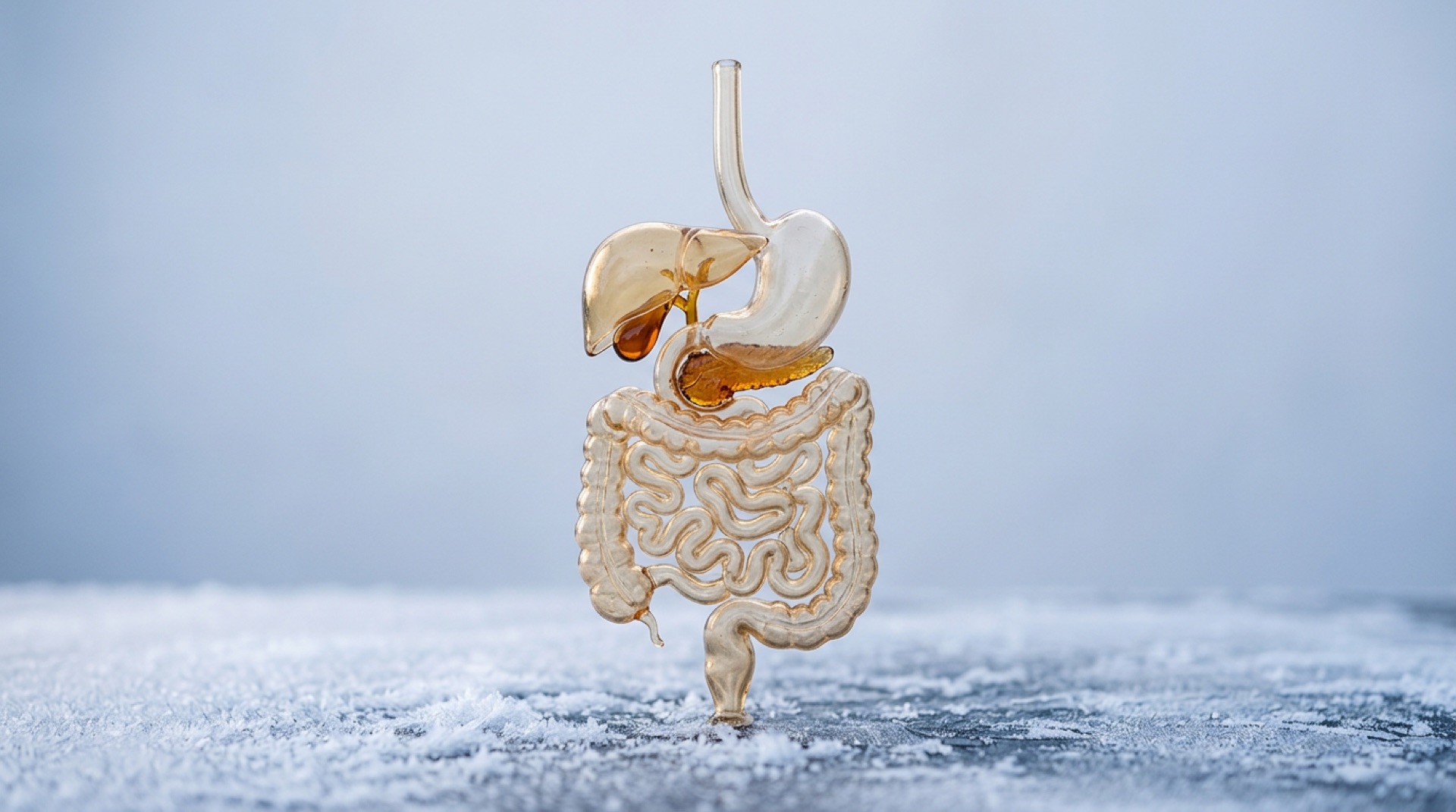
Your digestive system is a long, twisting tube from your mouth to your anus, helped by three organs: the liver, the gallbladder and the pancreas. Together they break food down into nutrients your body can absorb, most of them in the small intestine, and turn what is left into stool.
Key facts
- 1 long, twisting tube runs from your mouth to your anus: the gastrointestinal (GI) tract.
- 3 solid organs help it: the liver, the gallbladder and the pancreas.
- Most nutrients are absorbed through the walls of the small intestine.
- Vitamin K is made by the bacteria in your large intestine.
How it works, in 5 steps
1. The mouth starts the job
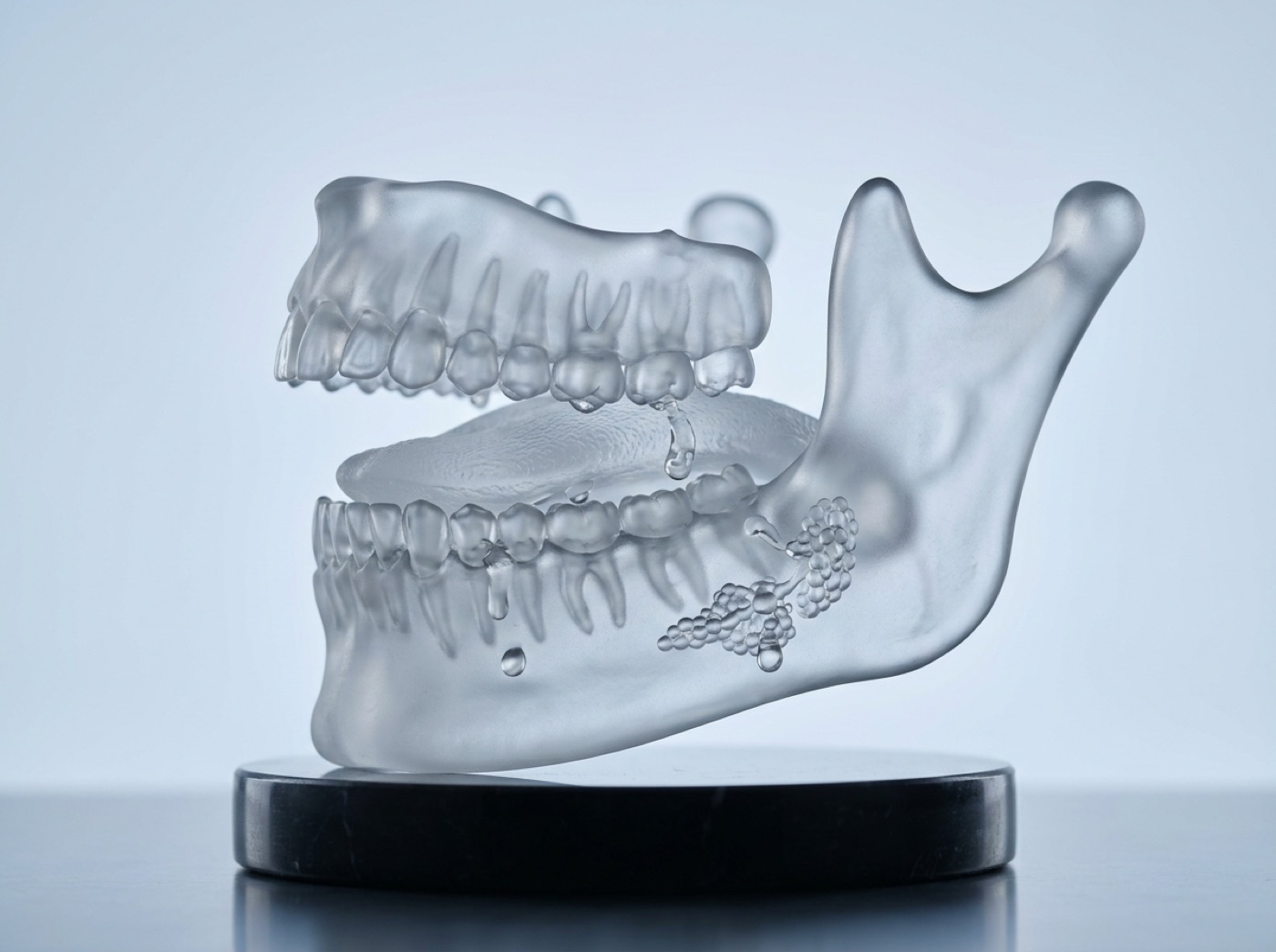
Chewing breaks food into smaller pieces and saliva moistens it. Saliva also contains an enzyme that begins to break down the starches in your food.
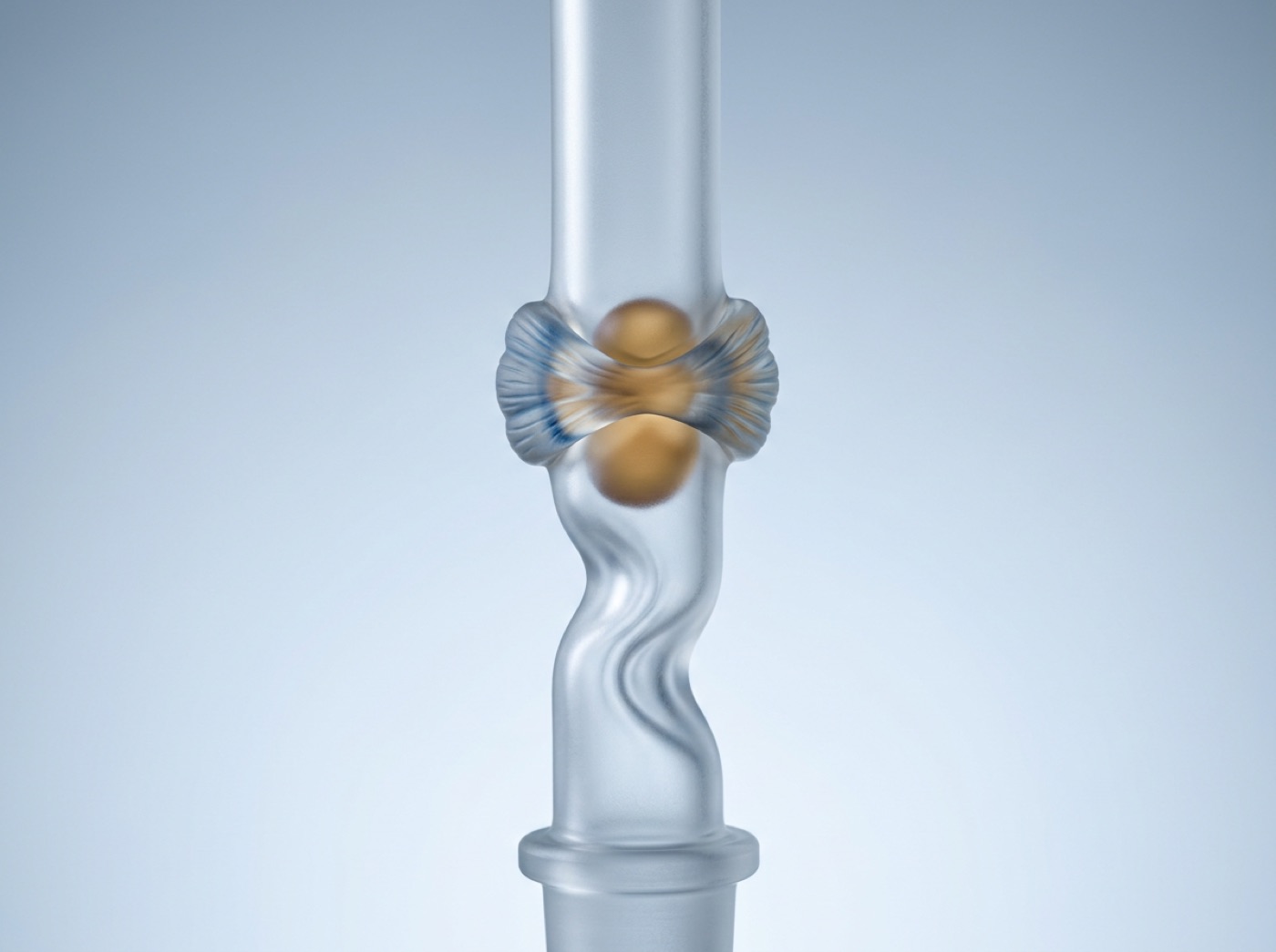
2. The oesophagus pushes it down
When you swallow, waves of muscle movement called peristalsis carry the food down the oesophagus. At the bottom, a ring-like muscle relaxes to let it into the stomach.
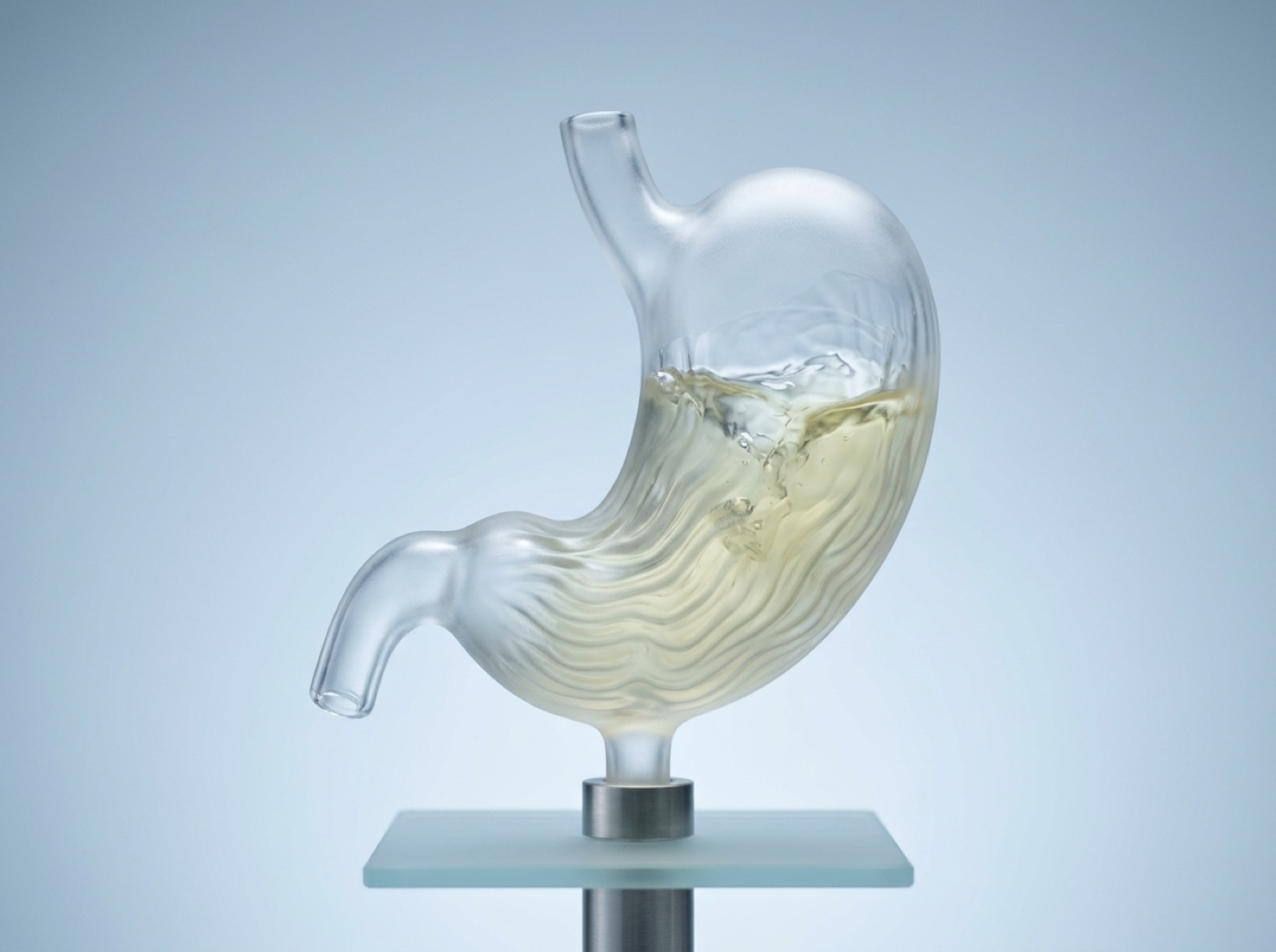
3. The stomach mixes and breaks it down
The stomach muscles mix the food with stomach acid and digestive enzymes. Then the stomach slowly empties this mixture, called chyme, into the small intestine.
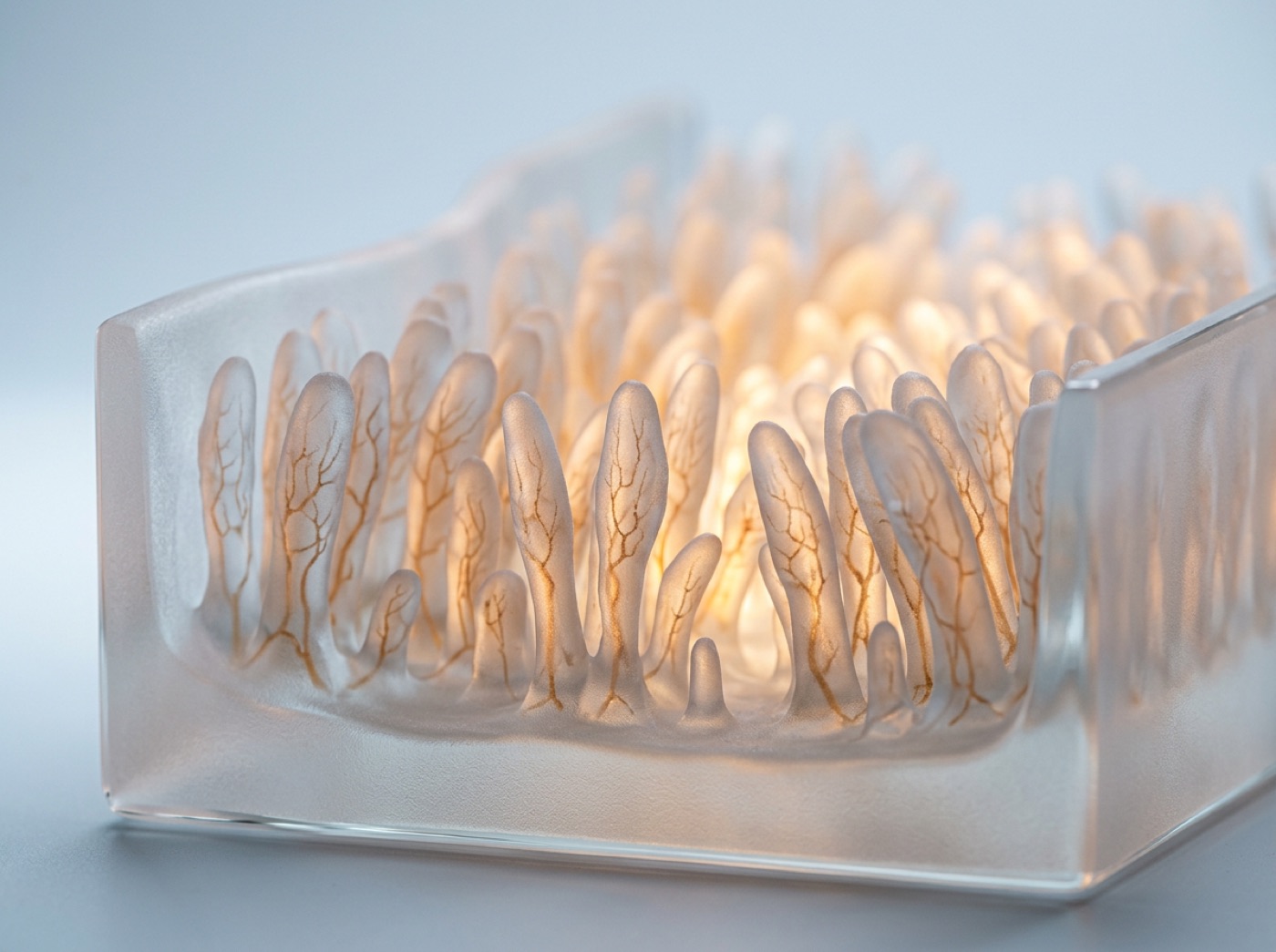
4. The small intestine absorbs the nutrients
Here the food mixes with digestive juice from the pancreas, which breaks down carbohydrates, fats and proteins, and with bile made by the liver and stored in the gallbladder, which helps digest fats. The walls of the small intestine absorb water and most of the nutrients into the blood, which carries them to the liver. Fatty acids and some vitamins go through the lymphatic system instead.
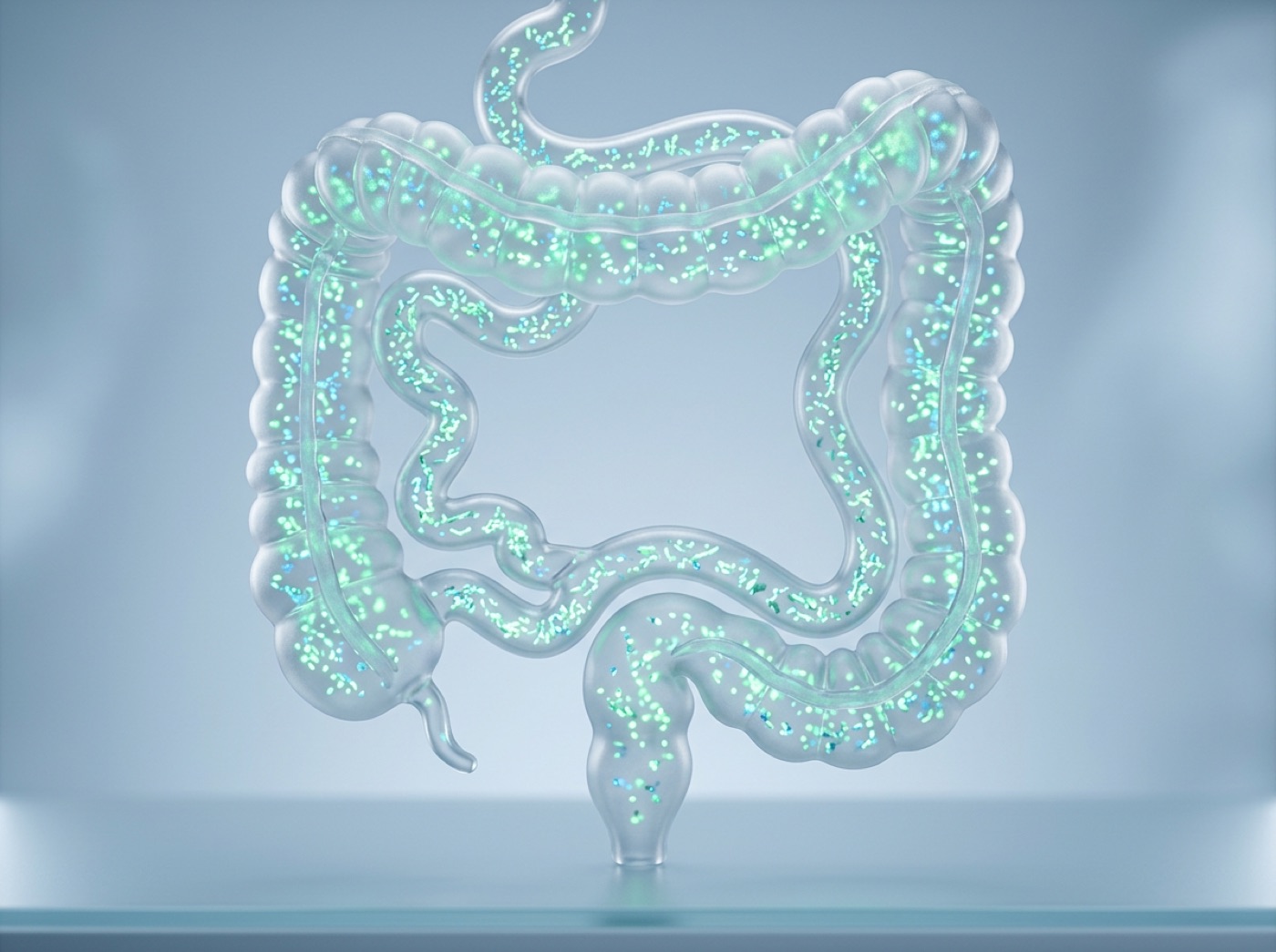
5. The large intestine makes stool
The large intestine absorbs water and turns the waste from liquid into stool, which the rectum stores until you go to the toilet. Bacteria living there break down the remaining nutrients and make vitamin K.
The helpers: liver, gallbladder and pancreas
The pancreas makes a digestive juice with enzymes that break down carbohydrates, fats and proteins, and sends it to the small intestine. The liver makes bile, which helps digest fats and some vitamins, and stores and shares out the nutrients the blood brings it. The gallbladder stores bile between meals and releases it into the small intestine when you eat.
When stomach pain needs a doctor
See a doctor if you are unsure or worried. Get help the same day if:
- you have problems swallowing food
- you are losing weight without trying to
- you bleed from your bottom
- the pain, or bloating, does not go away or keeps coming back
Call 112 or go to an emergency department if the pain came on very suddenly or is severe, if it hurts when you touch your stomach, if you are vomiting blood or your vomit looks like ground coffee, or if your poo is bloody, or black, sticky and very smelly.
Frequently asked questions
Where are nutrients absorbed?
Mostly through the walls of the small intestine, into the blood. Fatty acids and some vitamins are absorbed into the lymphatic system instead.
What does bile do?
Bile is made by the liver and stored in the gallbladder. It is released into the small intestine when you eat and helps digest fats and some vitamins.
What is peristalsis?
The wave-like muscle movement that pushes food along your digestive tract, starting in the oesophagus.
What do gut bacteria do?
They help digestion. In the small intestine they make some of the enzymes needed to digest carbohydrates; in the large intestine they break down the remaining nutrients and make vitamin K.
When is stomach pain an emergency?
Call 112 if the pain came on very suddenly or is severe, if your stomach hurts when touched, if you vomit blood or something that looks like ground coffee, or if your poo is bloody, or black, sticky and very smelly.
Sources
Written by Anpheros from the sources above and checked on 16 October 2026. General information, not medical advice: for your own health, talk to a doctor. In an emergency, call 112.