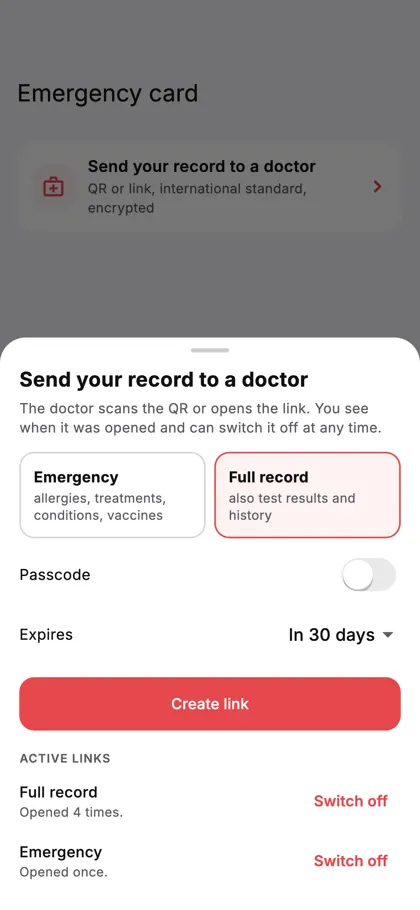
The emergency card: what a doctor needs to know about you in 30 seconds
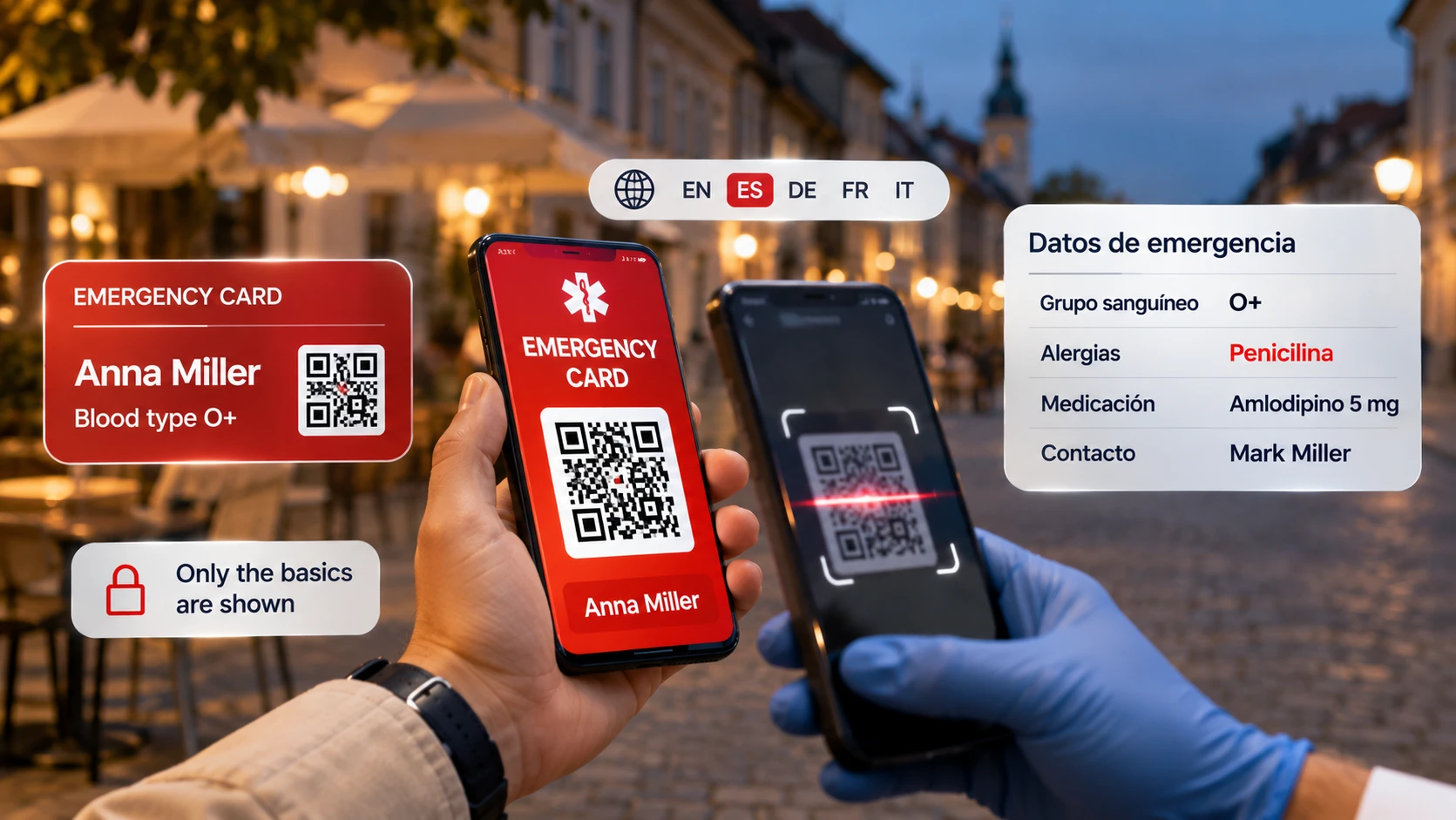
In an emergency, someone who does not know you has to learn a few things fast: your allergies, your conditions, the medications you take, your blood group and who to call. If you cannot speak, that information is in a relative's memory or nowhere. An emergency card puts it within reach, in the order it matters.
Allergies and conditions
Penicillin allergy, asthma, diabetes: the things that change what a doctor does in the first minutes.
Current medications
The full list, with active substances, so no emergency treatment clashes with what you take.
Blood group and vaccines
Group, Rh, tetanus, plus emergency contacts and your GP.
What the card contains
The card is generated from your record, so it is always current without rewriting it:
- blood group and Rh;
- allergies, with the reaction you have (rash, anaphylaxis);
- conditions a doctor must account for: diabetes, epilepsy, heart problems, pregnancy;
- medications you take, with active substance and dose;
- devices and implants: pacemaker, stent, prostheses;
- emergency contacts and your GP;
- relevant vaccines, such as tetanus.
You choose what goes on the card. Diagnoses that do not matter in an emergency stay in the record, not on the card.
How you carry it
Who it helps
How to start
The emergency card is included in the free Basic plan.
Frequently asked questions
Can it be seen without unlocking the phone?
The card opens from the app. For access without unlocking, also set it as an image on the lock screen, or keep the printed card in your wallet. On iPhone you can also fill in the Medical ID in the Health app with the same data.
Who guarantees the data is correct?
You do. The card reflects what is in your record. What you scanned from medical documents has the source attached. Check it once with your GP, and it updates by itself when you change a medication.
Is it valid in another country?
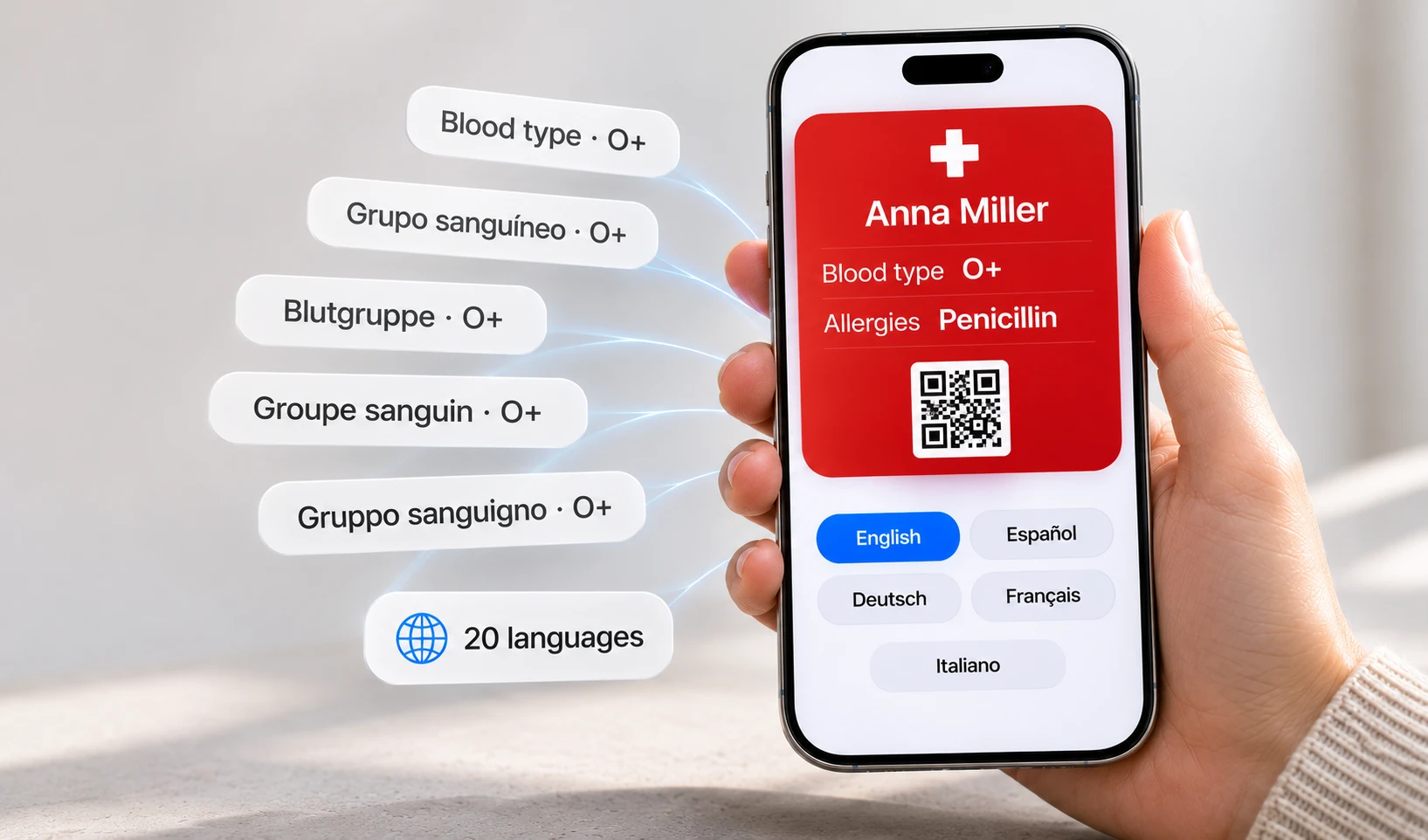
Yes. The data is in the standard European format, the card is available in 20 languages, and when someone scans the QR code it opens in the language of their phone.
What happens to my data?
It is stored in the European Union and it is yours. The printed card or lock-screen image contains only what you chose to put on it.