
Two things decide when you fall asleep: a body clock that follows a roughly 24-hour rhythm set by light and darkness, and a need for sleep that grows the longer you are awake. Once asleep, you go through 4 to 6 cycles a night, each 80 to 100 minutes long. Adults need 7 to 9 hours.
Key facts
- 7–9 h is how much sleep adults need.
- 80–100 min is the length of one sleep cycle.
- 4–6 sleep cycles make up a typical night.
- ≈ 24 h is the rhythm of your body clock, kept in time by light and darkness.
How it works, in 5 steps

1. Your body clock keeps time
A central clock in your brain follows a roughly 24-hour rhythm, called the circadian rhythm, and tells you when it is time to sleep. Light entering your eyes reaches the part of the brain that runs this clock, the suprachiasmatic nucleus, and keeps it in step with day and night. Artificial light interferes with this.

2. The need for sleep builds up
Your body's need for sleep grows the longer you have been awake. While you are awake, a substance called adenosine keeps building up in your brain.
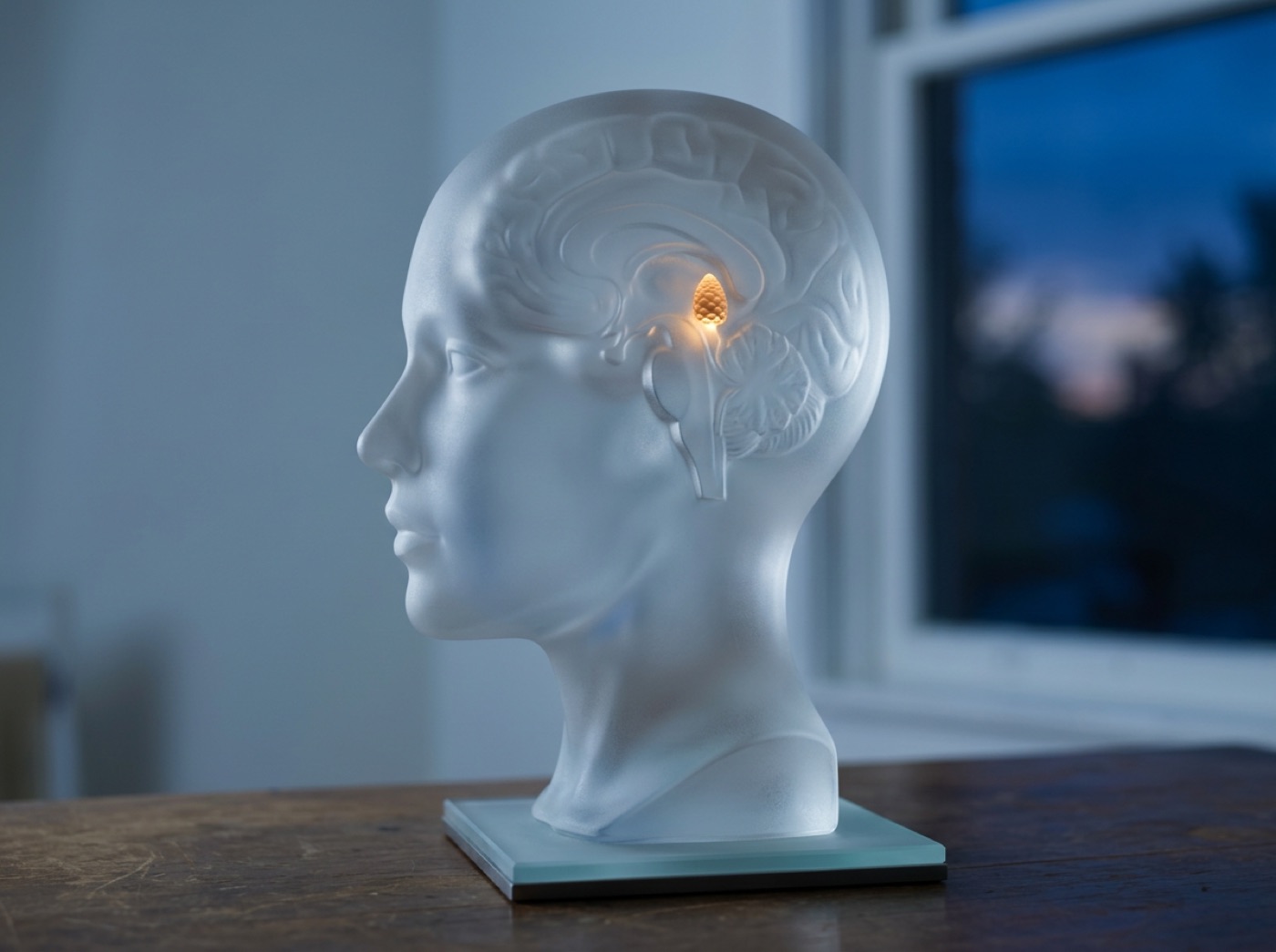
3. Melatonin rises in the evening
The level of melatonin in your blood starts to rise in the evening and peaks in the early morning. Melatonin is thought to help you sleep, and bright artificial light late in the evening can stop your brain from releasing it.

4. You cycle through the stages of sleep
Sleep starts with non-REM sleep: stage 1, the change from being awake to being asleep; stage 2, when you are asleep; and stage 3, deep or slow-wave sleep, which is more common early in the night. Then comes REM sleep, and the cycle starts again every 80 to 100 minutes. You may wake briefly between cycles.

5. REM sleep, when you dream
During REM sleep your eyes twitch and your brain is nearly as active as when you are awake. This is when you usually dream, and your muscles go limp so that you do not act out your dreams. You get more REM sleep later in the night.
Habits that help you sleep
- Go to bed only when you feel sleepy.
- Wind down and relax for at least 1 hour before bed.
- Keep your bedroom dark and quiet.
- Avoid smoking, alcohol, tea and coffee for at least 6 hours before going to bed.
When poor sleep needs a doctor
Trouble sleeping that lasts less than 3 months is called short-term insomnia; 3 months or longer is long-term insomnia. See a doctor if:
- changing your sleeping habits has not helped
- you have had trouble sleeping for months
- your sleep problems are affecting your daily life in a way that makes it hard to cope
Frequently asked questions
How much sleep do adults need?
Adults need 7 to 9 hours of sleep.
How long is a sleep cycle?
About 80 to 100 minutes. A typical night has 4 to 6 cycles, each going through the stages of non-REM sleep and then REM sleep.
What is REM sleep?
The stage of sleep in which your eyes twitch, your brain is almost as active as when you are awake and you usually dream. Your muscles go limp so that you do not act out your dreams. It is more common later in the night.
Why do I wake up during the night?
Waking briefly between sleep cycles is normal. If you have trouble sleeping for months, or it makes your days hard to cope with, talk to a doctor.
What makes you feel sleepy?
Two things: your body clock, which follows a roughly 24-hour rhythm set by light and darkness, and a need for sleep that builds while you are awake, linked to a substance called adenosine. In the evening, rising melatonin also helps.
Sources
Written by Anpheros from the sources above and checked on 16 October 2026. General information, not medical advice: for your own health, talk to a doctor. In an emergency, call 112.