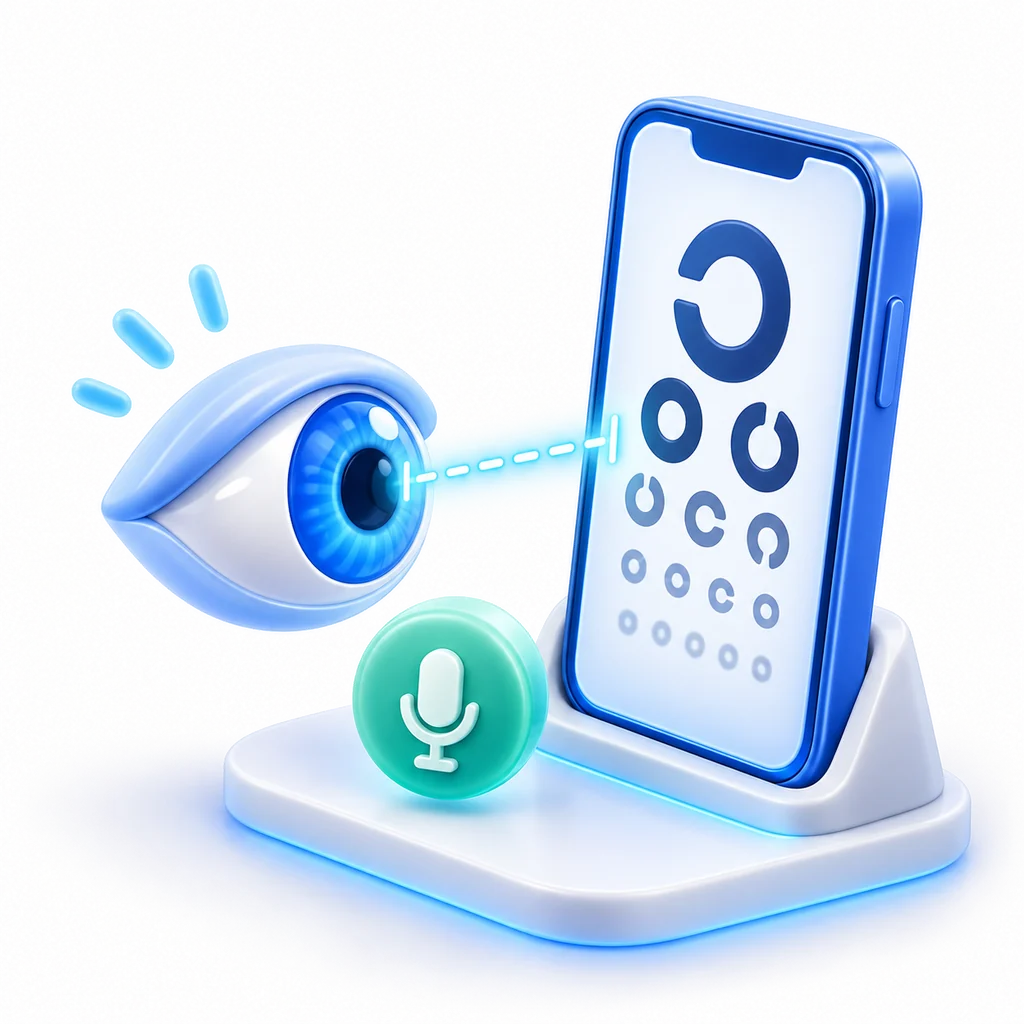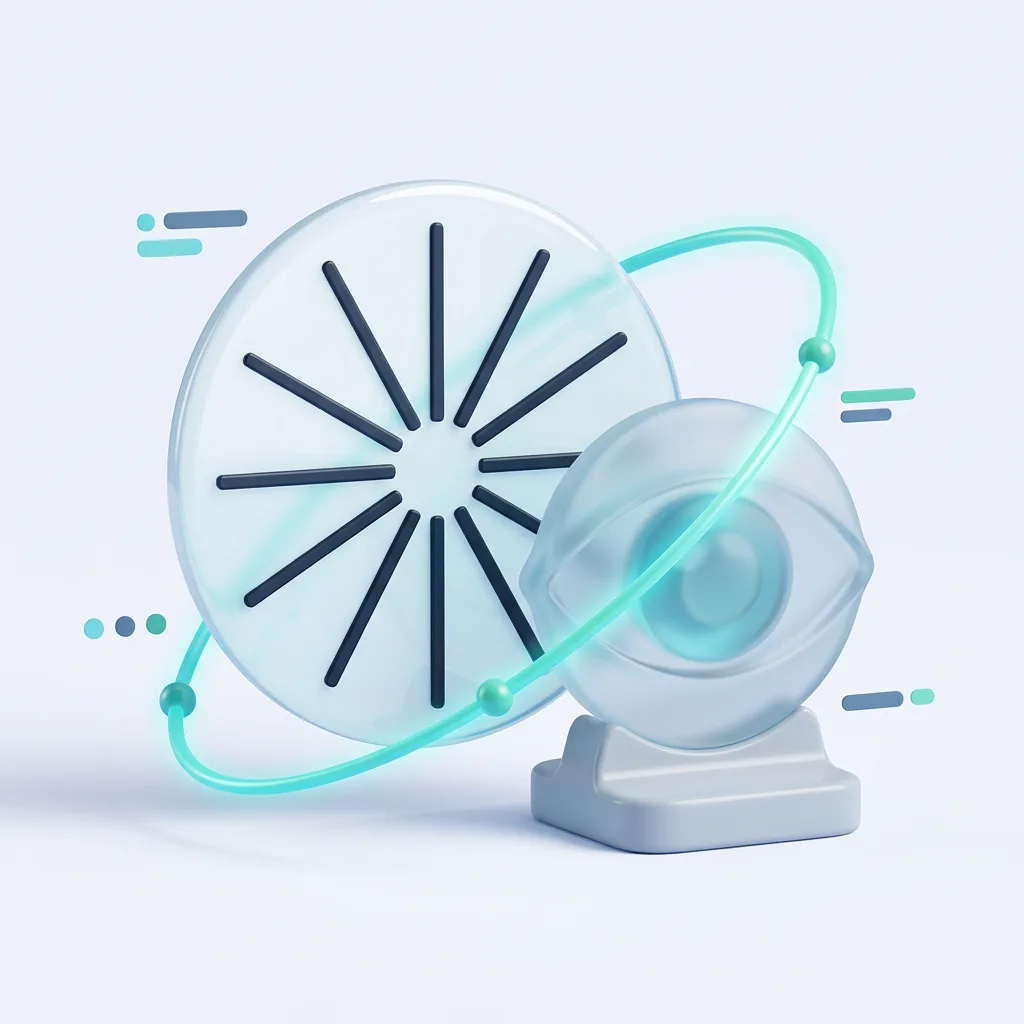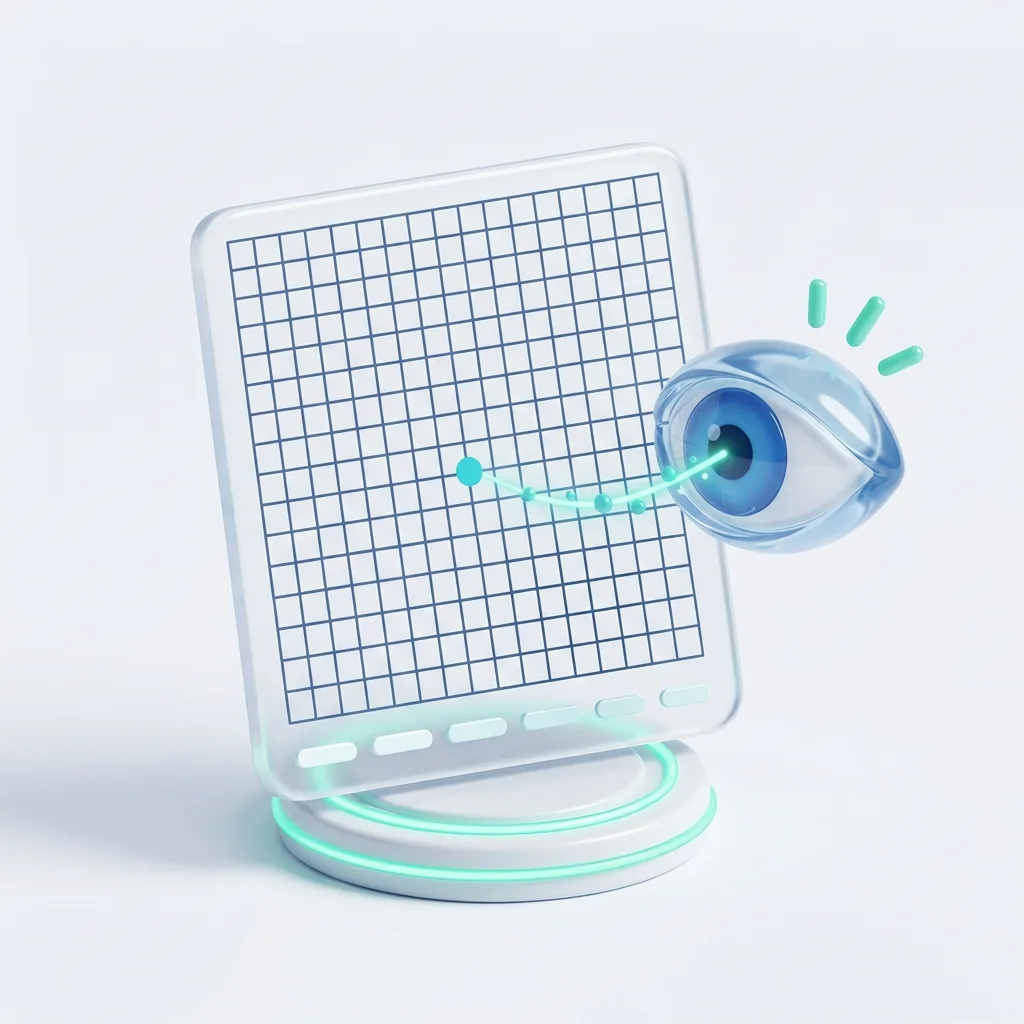

In short: the Amsler grid is a simple chart of straight lines with a dot in the middle. You look at the dot with one eye and notice whether the lines around it look straight and complete. In this page the grid is sized to your screen with a bank card, and three questions per eye take about two minutes. Wavy, blurred or missing areas are worth checking with an eye doctor or optometrist soon; the grid itself does not diagnose anything.

Sized to your screen
A bank card sets the scale, so the grid covers the centre of your vision at reading distance.
Three questions per eye
Corners and sides, straight lines, and any blurred or missing areas.

A clear summary
For each eye: no changes noticed, or changes worth checking.
How the test works
- Set the scale with a bank card held against the screen (if you did it in another test on this page visit, it is kept).
- Hold the screen at reading distance. The test tells you how far, usually 30 cm, less on a small screen.
- Cover one eye and look only at the dot in the centre.
- Answer three questions about the lines around the dot, then switch eyes.
What the questions mean
The grid covers roughly the central 20 degrees of your vision, the part you use to read and recognise faces. Lines that look bent or wavy, squares of different sizes, or patches that look blurred, grey or missing are changes in that central area. They can have many causes, and only an eye exam can tell which; that is why new or worsening changes are worth checking soon.
What this test is not
It is not an eye exam and it does not measure your eyesight. It cannot detect every eye problem, and a normal result does not mean your eyes are healthy. Regular eye exams remain important, especially after 50 or if you have diabetes.
Frequently asked questions
What is the Amsler grid used for?
It is a self-check for the centre of your vision. People are often asked by eye doctors to look at it regularly at home, to notice changes between visits.
Should I wear glasses for the Amsler grid?
Yes, wear your usual reading glasses, and use good, even light.
What if some lines look wavy?
Note which eye and where, and book a check with an eye doctor or optometrist soon, especially if it is new or getting worse. If the change is sudden, seek care quickly.
Is my result saved?
The test runs on your device and keeps the result only while this page is open; nothing is stored in your browser. You can copy it, or save it in a free Anpheros account.