
In short: contrast sensitivity is how well you see pale shapes against a light background, the kind of vision that matters in dim light, fog or at night. In this page the letter E gets paler in small steps while you say which way it points, one eye at a time, for about three minutes. You get an indicative score in log units for each eye; it does not replace an eye exam.

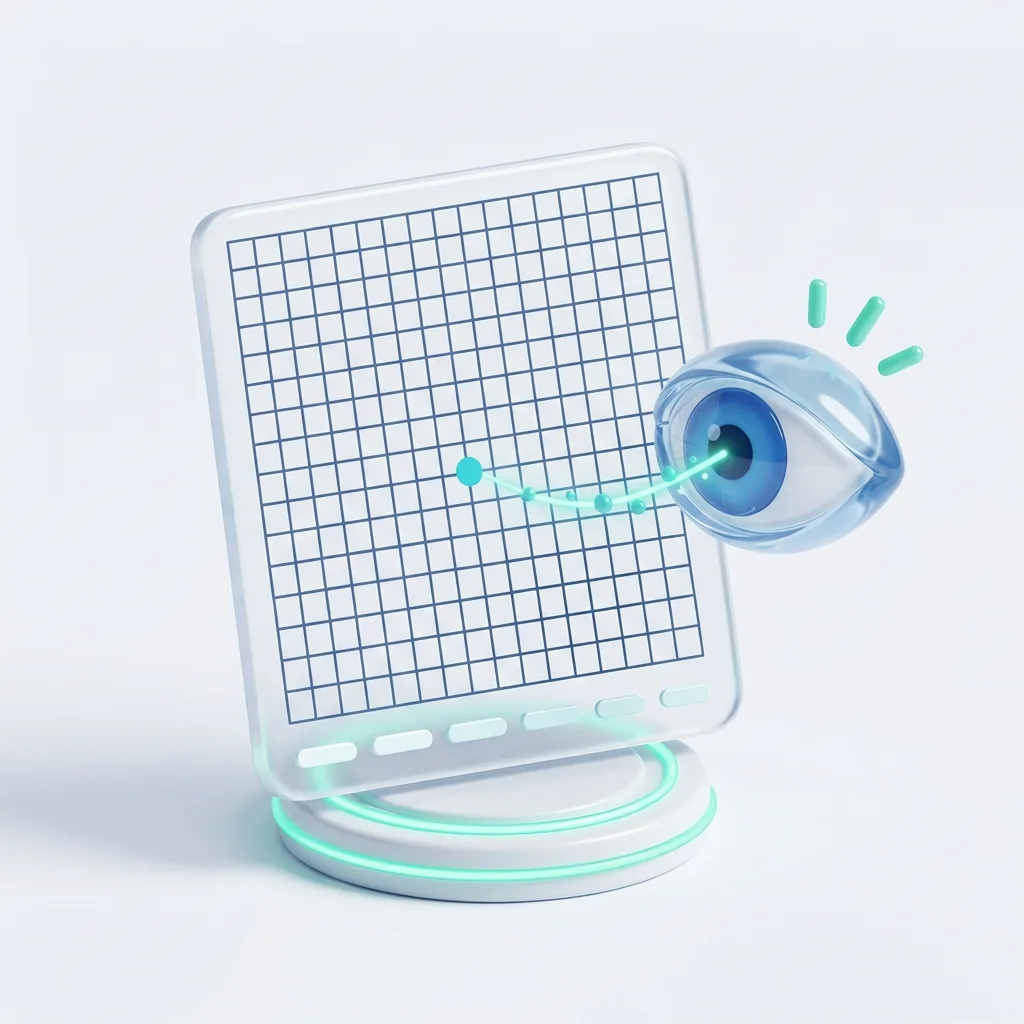
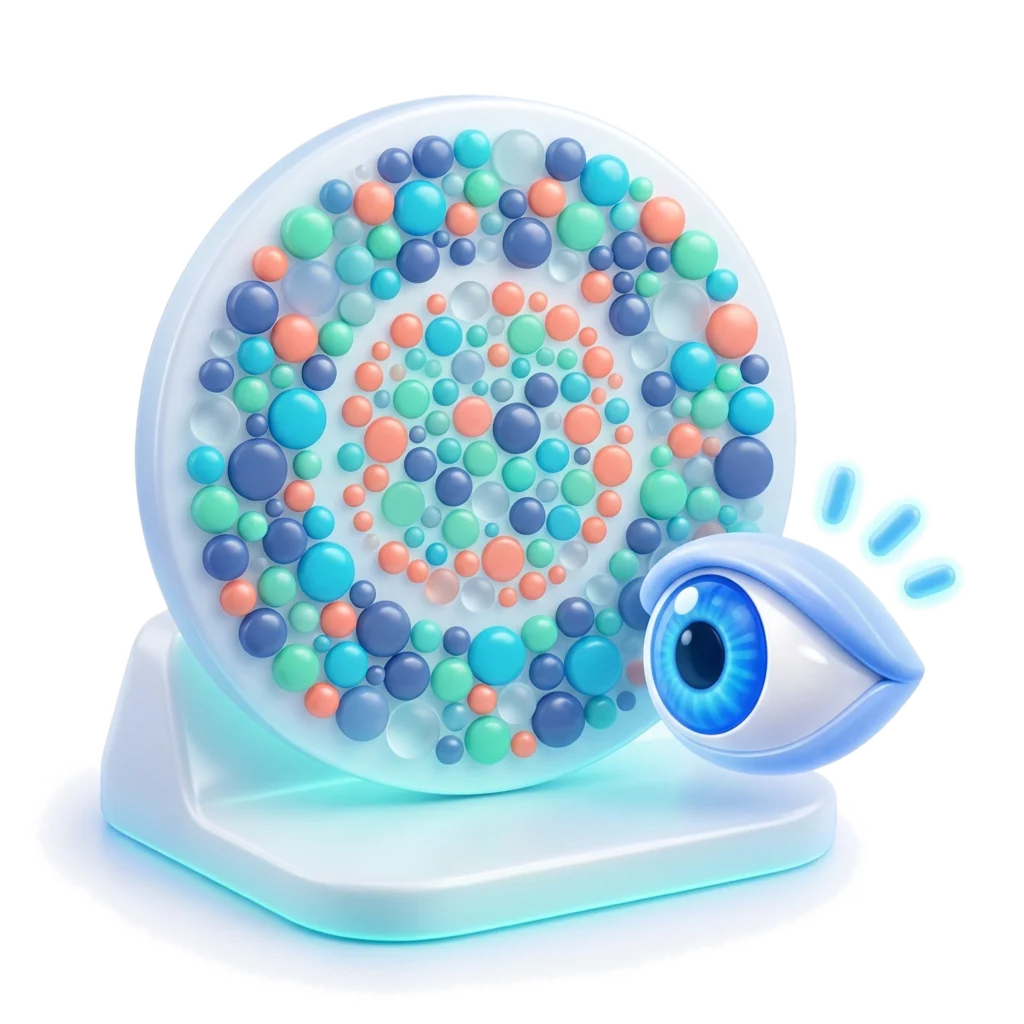
Paler, step by step
Each step is about 30% paler, like the rows of clinical contrast charts.
Simple answers
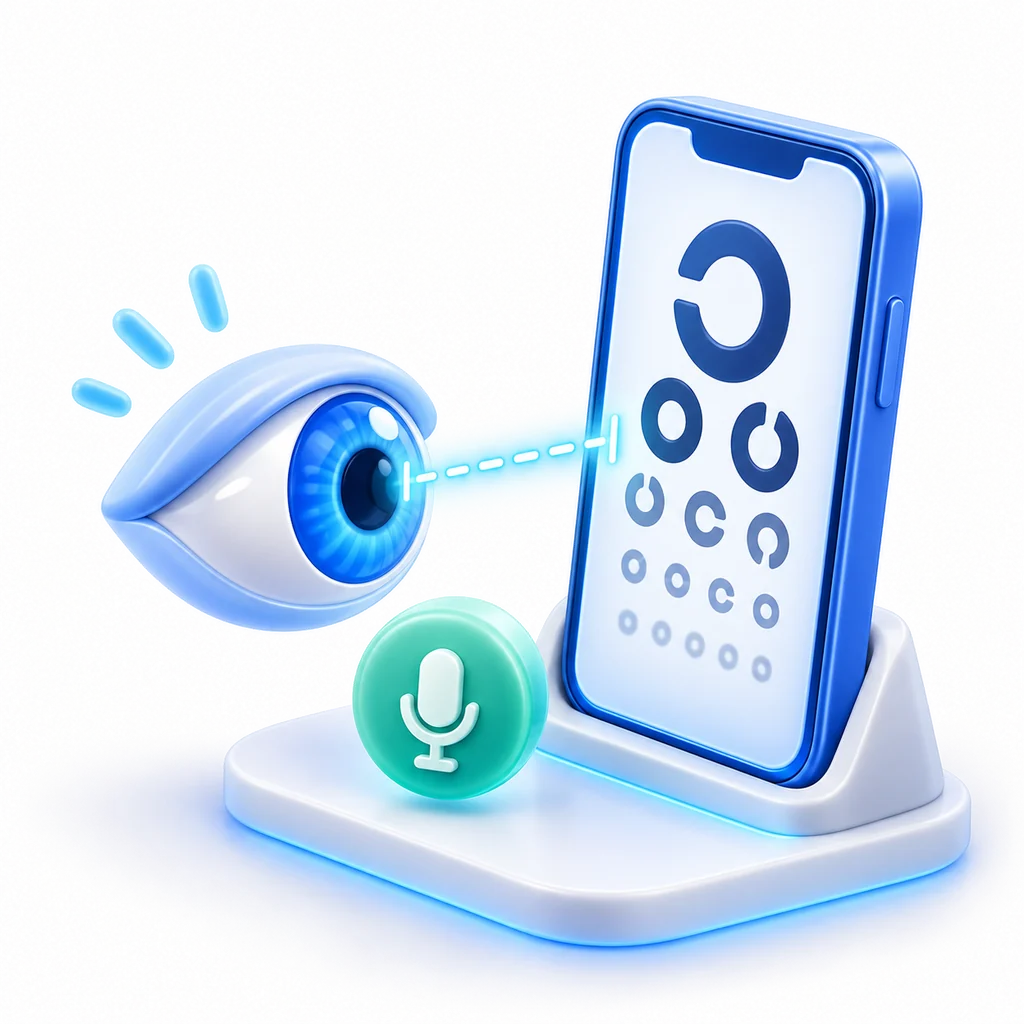
Which way do the arms of the E point? Arrow keys or a tap.

A score for each eye
In log units, with a note if your screen limits the result.
How the test works
- Set up the screen. Brightness about the middle, night mode and colour filters off, no glare.
- Sit about a metre away with your usual glasses.
- Cover one eye and say which way the E points. It gets paler while you answer correctly.
- Switch eyes. A step passes with three right answers out of five.
What the score means
The score is the logarithm of how pale the faintest E you saw was: 1.0 means you saw a shape with 10% contrast, 2.0 means 1%. On clinical charts, many adults with healthy eyes score around 1.65 to 2.0. Most screens cannot show shapes paler than about 1% near white, so very good results may be capped; the result says when that happens.
What this test is not
It is an indicative check on your own screen, not a clinical contrast chart, and it does not test eye health. If you often struggle in dim light, fog or at night, mention it at your next eye exam.
Frequently asked questions
What is contrast sensitivity?
The ability to see shapes that differ only a little from their background. You can read a sharp black letter well and still find it hard to see a grey step in dim light.
Is this the same as visual acuity?
No. Acuity measures the smallest letter you can read at full contrast; contrast sensitivity measures the palest shape you can see at a large size. They can change independently.
Why does my screen matter?
Brightness, contrast and the number of shades a screen can show limit how pale the E can get. Compare results on the same screen and settings.
Is my result saved?
The test runs on your device and keeps the result only while this page is open; nothing is stored in your browser. You can copy it, or save it in a free Anpheros account.