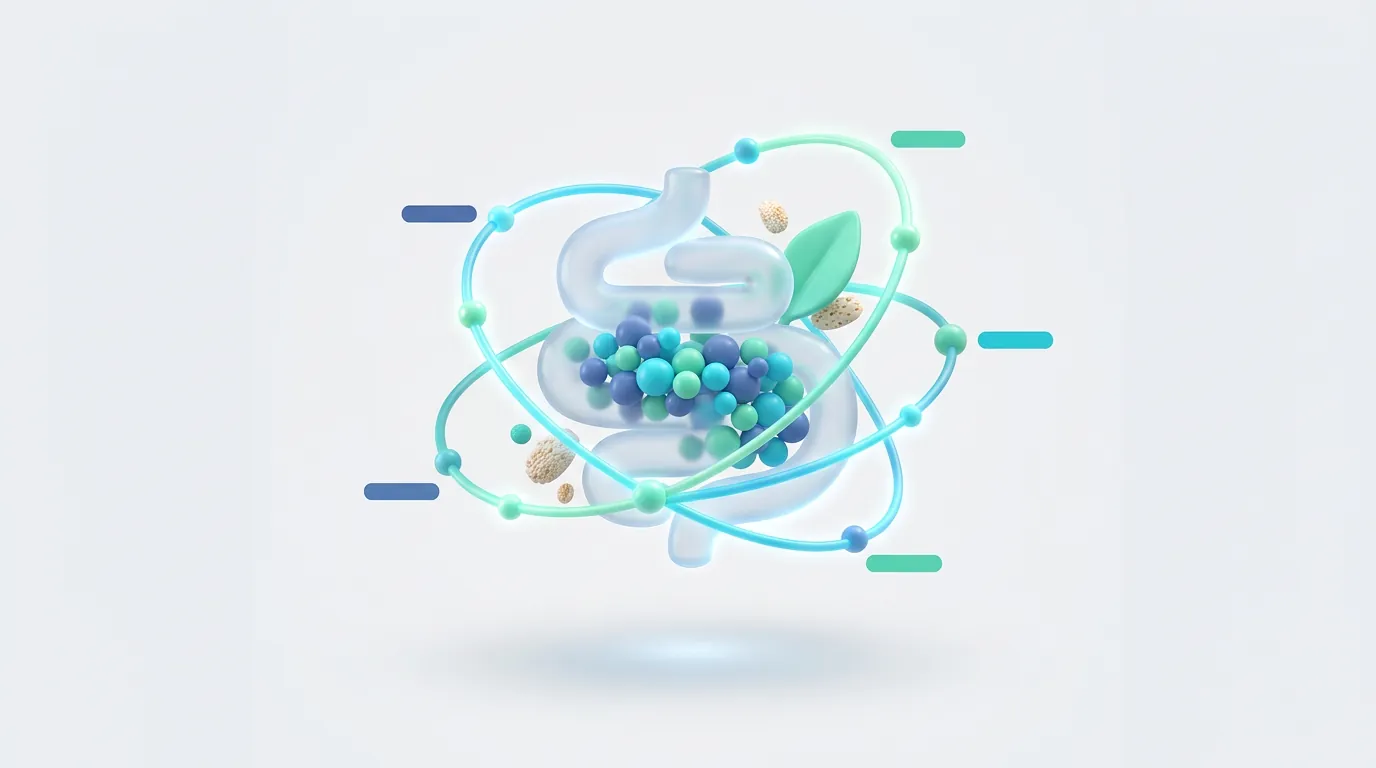
In short: your gut hosts trillions of bacteria and other microbes that help digest fibre, make some vitamins and train the immune system. A varied diet rich in fibre is the best-supported way to keep them diverse. Probiotics help in some specific situations; home microbiome tests cannot yet guide treatment.
At a glance
| What lives there | Trillions of bacteria, plus fungi, viruses and archaea, mostly in the large intestine |
|---|---|
| Main jobs | Ferment fibre, make some vitamins (K, some B), support the gut barrier and immunity |
| Best-supported habit | A varied, fibre-rich diet: vegetables, fruit, legumes, whole grains, nuts |
| Probiotics | Evidence for specific strains in specific cases, such as antibiotic-associated diarrhoea |
| Home microbiome tests | Interesting, but not validated for diagnosis or treatment |
Fibre feeds them
Microbes turn fibre into short-chain fatty acids that nourish the gut lining.

Diversity matters
A wide range of species is linked to better resilience.

Food and symptoms
Note meals and gut symptoms in the app and see patterns over weeks.
What is the gut microbiome?
It is the community of microorganisms living in your digestive tract, together with their genes. Most live in the large intestine. Each person's mix is unique and is shaped by birth, early feeding, diet, medicines, illness, age and where you live. It stays fairly stable in adults but changes with diet within days.
What does the microbiome do for you?
Gut microbes break down fibre your own enzymes cannot digest, producing short-chain fatty acids such as butyrate that fuel the cells of the colon and help keep the gut barrier tight. They make vitamin K and some B vitamins, help train the immune system, and compete with harmful microbes. Research links microbiome changes to obesity, diabetes, inflammatory bowel disease and mood, but in most cases cause and effect are not yet clear.
What harms the microbiome?
Antibiotics can reduce diversity for weeks or months, which is one reason to take them only when a doctor prescribes them. Diets low in fibre and high in ultra-processed food reduce the microbes that make short-chain fatty acids. Infections, some other medicines, smoking and very little sleep also play a part.
How can you support a healthy microbiome?
Eat plenty of different plant foods: vegetables, fruit, legumes, whole grains, nuts and seeds. Most adults eat far less than the 25–30 g of fibre a day recommended by EFSA and many national guidelines. Fermented foods such as yogurt, kefir and sauerkraut increased microbial diversity in a Stanford trial. Increase fibre gradually to avoid bloating, and drink enough water.
Do probiotics and microbiome tests help?
Probiotics have good evidence only for specific strains in specific situations, such as preventing antibiotic-associated diarrhoea; effects differ by strain and person. Healthy people may not benefit. Stool microbiome tests sold to consumers describe which microbes are present but cannot diagnose disease or reliably guide diet or treatment. Talk to a doctor about persistent gut symptoms.
Key terms
- Microbiome: the community of microorganisms in a part of the body and their genes.
- Dysbiosis: a change in the microbial community linked to health problems.
- Prebiotics: fibres and compounds that feed beneficial microbes.
- Probiotics: live microorganisms that may benefit health in adequate amounts.
- Short-chain fatty acids: compounds such as butyrate made by microbes from fibre.
Sources
- NIH, National Center for Complementary and Integrative Health: Probiotics, what you need to know
- Wastyk et al., Gut-microbiota-targeted diets modulate human immune status, Cell (2021)
- EFSA: Dietary reference values for carbohydrates and dietary fibre
- Cochrane: Probiotics for the prevention of antibiotic-associated diarrhoea in children (2019)
Frequently asked questions
What are the signs of an unhealthy gut?
There is no single sign. Bloating, irregular bowel habits, pain or diarrhoea have many causes. Persistent symptoms, blood in the stool, unexplained weight loss or night-time symptoms need a doctor.
Should I take a probiotic every day?
Most healthy people do not need one. Probiotics may help in specific situations, such as during antibiotics. Choose a product with a named, studied strain and ask a pharmacist or doctor.
Are fermented foods the same as probiotics?
Not exactly. Fermented foods contain live microbes and other compounds and are part of a healthy diet, but the strains and amounts are not standardised like a probiotic product.
How quickly can diet change the microbiome?
Within days measurable changes appear, but lasting differences need sustained habits over weeks and months.
Can the microbiome affect mood?
The gut and brain communicate through nerves, hormones and immune signals. Research is active, but microbiome-based treatments for mood are not established.
How much fibre should I eat?
EFSA considers 25 g a day adequate for adults; many guidelines suggest 25–30 g. Raise it gradually.
Try it in Anpheros Daily
Note how you sleep, eat, feel and move in Anpheros Daily, next to your lab results, and see the patterns over weeks.

Anpheros builds a medical record that the patient controls and can share with any clinic, on an HL7 FHIR R4 platform, based in the EU. These guides help you understand and organise your health; they do not replace your doctor.
About Anpheros → Anpheros
The more you log, the clearer your record
Your health history in one place, under your control.
Free · Works in your browser · No card