In short: the body makes heat constantly (metabolism, muscles) and loses it through the skin, sweat and breath; the hypothalamus balances the two to hold core temperature near 37 °C, within roughly 36.5–37.5 °C across the day. Too warm: skin blood vessels open and sweat evaporates. Too cold: vessels narrow, muscles shiver, brown fat burns fuel. Fever is the set point raised on purpose by the immune system; heat stroke and hypothermia are the system overwhelmed, and both are emergencies. The body adapts to heat over one to two weeks, which matters for travel, work and heatwaves.
At a glance
| Normal core temperature | About 36.5–37.5 °C; lowest early morning, highest early evening; slightly higher after ovulation |
|---|---|
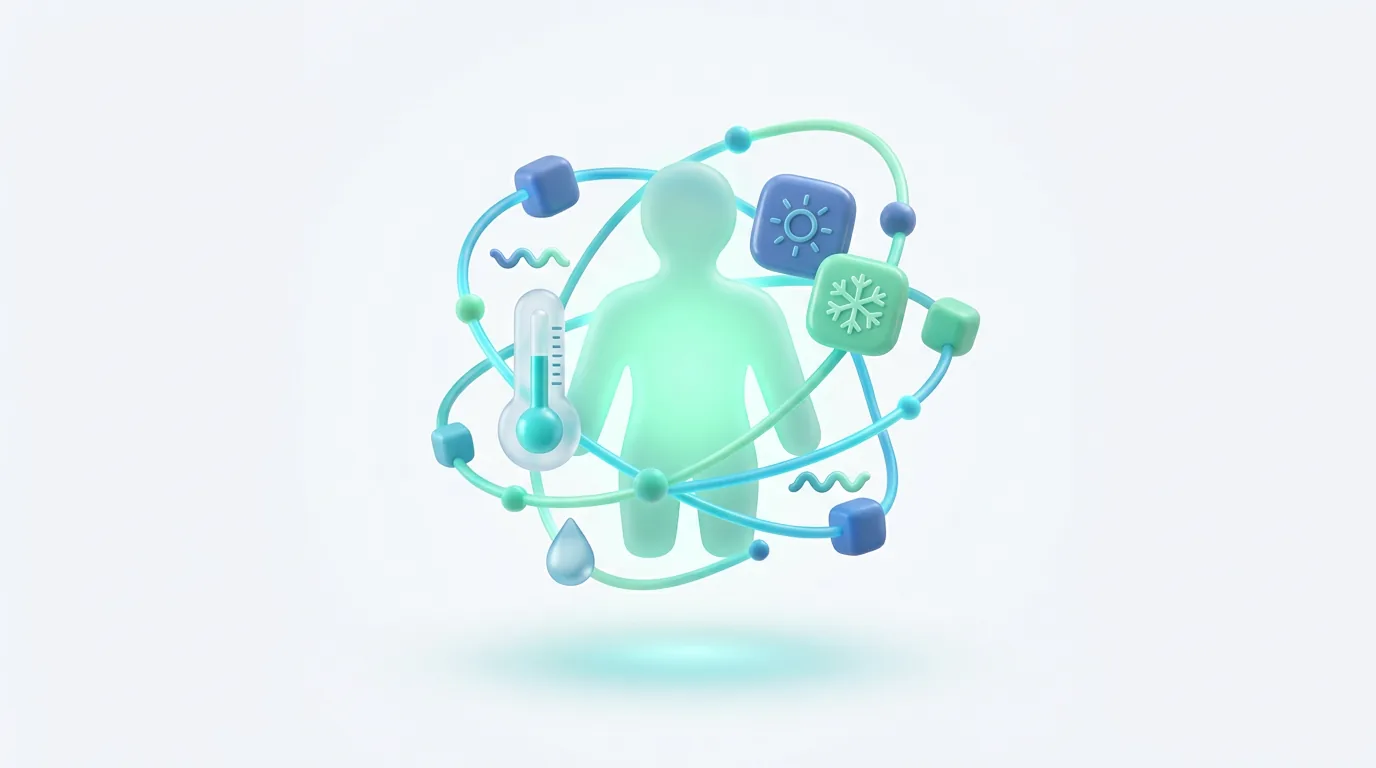
| Cooling | Vasodilation (skin flushes), sweating (evaporation), faster breathing; needs water and airflow |
| Warming | Vasoconstriction (pale, cold hands), shivering, brown fat, behaviour (clothes, shelter) |
| Fever | Set point raised by immune signals; chills while rising, sweating while breaking |
| Danger | Heat exhaustion (heavy sweating, weakness, nausea) → heat stroke (≥40 °C, confusion, hot skin): emergency; hypothermia below 35 °C |
| Adaptation | Heat acclimatisation in 7–14 days: earlier, more dilute sweat, lower heart rate |
Sweat only works if it evaporates
In humid air sweat drips instead of evaporating, so the same temperature feels and is more dangerous.
Heart rate is the early signal
In heat the heart works harder to send blood to the skin; a resting rate well above your baseline is a warning.
Children and older adults cool less well
Less sweating, less thirst and more medicines make them the first to suffer in heatwaves.
The balance
Metabolism produces heat all the time, more during digestion and much more during exercise. The body sheds it by four routes: radiation from the skin, conduction to cooler surfaces, convection to moving air, and evaporation of sweat and breath moisture. Temperature sensors in the skin and the brain report to the hypothalamus, which adjusts blood flow to the skin, sweating, shivering and the urge to seek shade or warmth. The result is a core temperature that moves by about one degree over the day and returns to the same point every night.
Cooling: skin and sweat
When core temperature rises, the hypothalamus opens the small vessels in the skin, so more warm blood reaches the surface (the flush of exercise), and starts sweating. Sweat cools only when it evaporates, which is why dry heat is more tolerable than humid heat at the same temperature, and why airflow and loose clothing matter. Sweating loses water and salt; without replacing the water, blood volume falls, the heart works harder and cooling fails. That sequence is heat exhaustion, and if core temperature passes about 40 °C with confusion or collapse, heat stroke, which needs emergency cooling and medical care.
Warming: vessels, shivering, brown fat
In cold, the skin vessels narrow to keep warm blood in the core (cold hands and feet are the system working, not failing), hairs rise, and muscles start the rapid contractions of shivering, which can multiply heat production several-fold. Brown fat, present in small amounts in adults, burns fuel directly for heat. Behaviour does the rest: clothing, shelter, movement, food. When core temperature falls below 35 °C, shivering eventually stops, judgement fails and the heart becomes irregular; that is hypothermia, an emergency most common in water, wind, alcohol and old age.
Fever is a different thing
Fever is not thermoregulation failing; it is the set point raised deliberately by immune signals, because a warmer body slows many microbes and speeds immune cells. That is why you feel cold and shiver as the fever rises (the body is below its new target) and sweat as it breaks (the target returns to normal). Most fevers in adults are short and self-limiting; very high temperatures, fever in infants, fever lasting more than a few days or with a stiff neck, rash, breathing difficulty or confusion need a doctor. See Acute vs chronic inflammation.
Adapting to heat and cold
Repeated exposure to heat over one to two weeks changes the body: sweating starts sooner and is more dilute, blood volume rises, heart rate at a given effort falls, and the same work feels easier. Athletes and outdoor workers use this on purpose; travellers get it by taking the first week easy. Adaptation to cold is weaker and slower. The groups least able to adapt are infants, older adults, people with heart or kidney conditions and those on medicines that affect sweating or fluid balance, which is why heatwave advice focuses on them. See Adaptation to the environment.
What to track
In a heatwave or on a trip: water intake, resting and exercise heart rate from a watch, urine colour, sleep, and how you feel in the afternoon; in illness: temperature morning and evening with the symptoms. Anpheros Daily's daily check-in and watch data from Apple Health or Health Connect keep those next to each other.
This page explains how the body works; it does not diagnose or recommend treatments. For symptoms that worry you, talk to your doctor.
Key terms
- Core temperature: the temperature of the internal organs, held near 37 °C.
- Hypothalamus: the brain's thermostat and control centre for temperature.
- Evaporative cooling: heat lost when sweat changes from liquid to vapour on the skin.
- Heat stroke: core temperature of about 40 °C or more with nervous-system signs; a medical emergency.
- Acclimatisation: the body's adaptation to a new climate over days to weeks.
Related pages
- Homeostasis
- Adaptation to the environment
- Acute vs chronic inflammation
- How your skin works
- Exercise and recovery
Sources
- WHO: Heat and health
- NHS: Heat exhaustion and heatstroke
- NHS: Hypothermia
- NIH MedlinePlus: Fever
- CDC: Heat and your health
Frequently asked questions
What is a normal body temperature?
About 36.5–37.5 °C measured in the mouth, lower in the morning and higher in the evening, slightly higher in the second half of the menstrual cycle. Armpit readings run about half a degree lower.
Why do I shiver when I have a fever?
Because the immune system has raised the body's target temperature and the body is below it; shivering generates heat to reach the new set point.
Heat exhaustion or heat stroke?
Heat exhaustion: heavy sweating, weakness, dizziness, nausea, cool clammy skin; rest, cool down and drink, and improve within 30 minutes. Heat stroke: very high temperature, hot skin, confusion or collapse; call emergency services and cool the person while waiting.
How long does it take to get used to heat?
Most of the adaptation happens in 7 to 14 days of daily exposure with moderate activity. It fades within a few weeks of returning to a cool climate.
Is sweating a lot a problem?
Usually it means your cooling system is working well, and trained people sweat sooner and more. Sweating with chest pain, at night without cause, or with weight loss is a doctor's question.
Do children and older adults need different care in heat?
Yes. Both sweat less effectively and older adults feel thirst less; many common medicines change fluid balance. Shade, water offered regularly, cool rooms and checking on them are the practical measures.
Try it in Anpheros Daily
Note how you sleep, eat, feel and move in Anpheros Daily, next to your lab results, and see the patterns over weeks.

Anpheros builds a medical record that the patient controls and can share with any clinic, on an HL7 FHIR R4 platform, based in the EU. These guides help you understand and organise your health; they do not replace your doctor.
About Anpheros → Anpheros
The more you log, the clearer your record
Your health history in one place, under your control.
Free · Works in your browser · No card