In short: some herbal products have solid evidence for specific uses, such as ginger for nausea and peppermint oil for irritable bowel symptoms. Many popular herbs have little or no proof. Natural does not mean safe: herbs can cause side effects and interact with medicines. Talk to your doctor or pharmacist before using them, especially if you take other medicines, are pregnant or have a long-term condition.
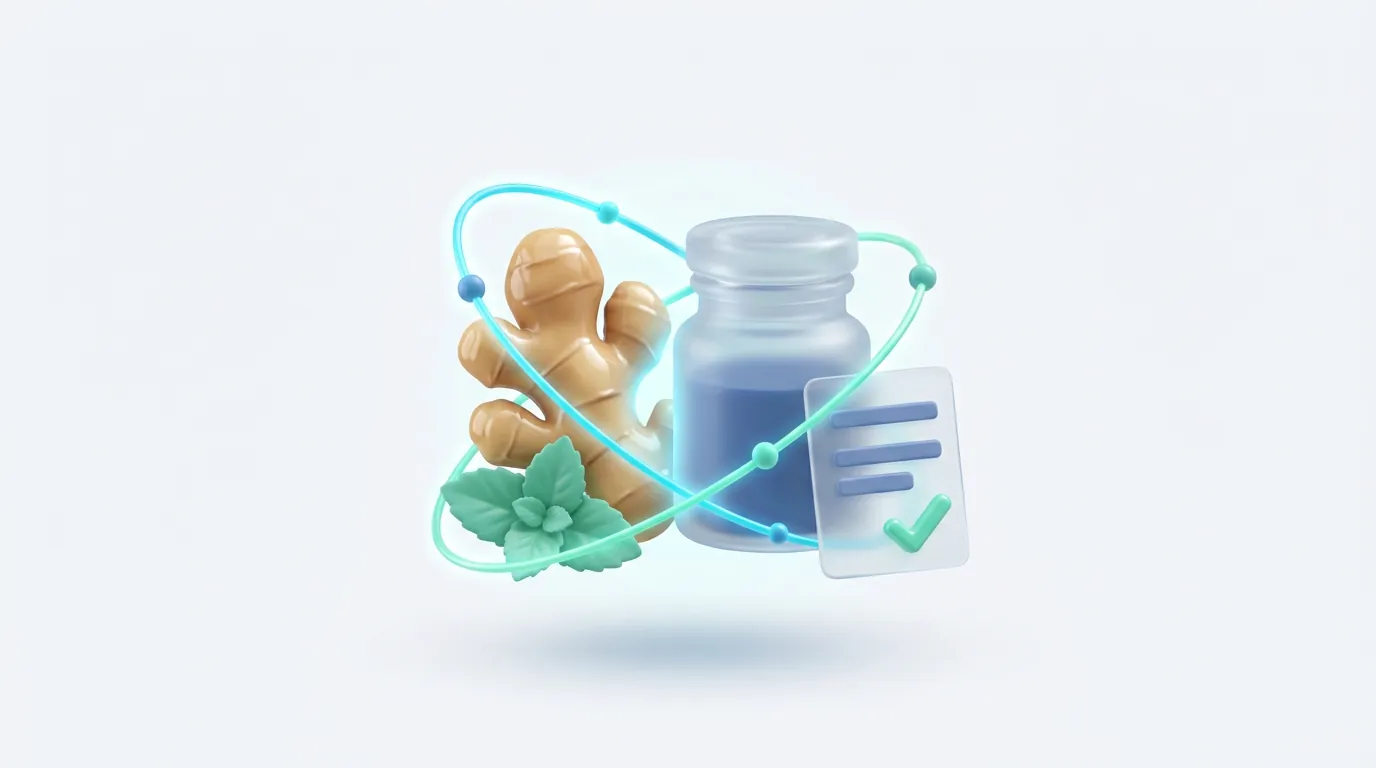
At a glance
| Good evidence (specific uses) | Ginger for nausea, peppermint oil for IBS symptoms |
|---|---|
| Mixed or weak evidence | Echinacea for colds, chamomile for sleep, valerian, turmeric supplements |
| Known interaction risk | St John's wort with many medicines, including the contraceptive pill and antidepressants |
| In the EU | Traditional herbal medicines are registered through EMA monographs |
| Always | Tell your doctor and pharmacist what you take |

Evidence varies
A few herbs are well studied; most are not.
Interactions are real
Herbs can change how medicines work.

One complete list
Add herbal products to your medication list in the app, so every doctor sees them.
How do we know if a herb works?
The same way as for any treatment: randomised controlled trials comparing the herb with a placebo, ideally summarised in systematic reviews such as Cochrane's. Traditional use tells us what people have tried, not whether it works. Herbal products also vary a lot in strength and purity, which makes results hard to compare.
What does the evidence show for common herbs?
| Herb | Use studied | What the evidence suggests |
|---|---|---|
| Ginger | Nausea in pregnancy, after surgery, with chemotherapy | May reduce nausea; evidence is moderate and varies by situation |
| Peppermint oil | Irritable bowel syndrome | In trials, enteric-coated capsules eased abdominal pain and bloating |
| Chamomile | Sleep, anxiety | Small studies, weak evidence |
| Echinacea | Preventing or treating colds | Inconsistent results; benefit, if any, is small |
| Valerian | Sleep | Evidence weak and inconsistent |
| Turmeric (curcumin) | Joint pain, inflammation | Some small trials; poor absorption; quality varies |
| St John's wort | Mild depression | Some evidence, but serious interactions with many medicines |
This table describes research findings, not recommendations. Ask your doctor or pharmacist before using any of them.
Is natural always safe?
No. Herbs contain active compounds that can cause side effects, from stomach upset to liver injury in rare cases. Some products have been found contaminated or mislabelled. Children, pregnant and breastfeeding women, older adults and people with liver or kidney disease are more vulnerable.
How do herbs interact with medicines?
Some herbs change how the liver breaks down medicines. St John's wort makes the contraceptive pill, some heart medicines, blood thinners, HIV medicines and immunosuppressants less effective. Ginkgo and high-dose garlic may increase bleeding with anticoagulants. Grapefruit, though a food, affects many medicines. Always tell your doctor and pharmacist about any herbal product, and keep it on your medication list.
How should you talk to your doctor about herbs?
Bring the actual product or a photo of the label, with the dose and how often you take it. Ask whether it is safe with your medicines and condition, and what evidence exists for your purpose. Do not stop a prescribed treatment in favour of a herbal one without your doctor's advice.
Key terms
- Herbal medicine: a product made from plants, used for health purposes.
- Randomised controlled trial: a study where people are randomly assigned to the treatment or a comparison.
- Systematic review: a structured summary of all good-quality studies on a question.
- Herb–drug interaction: when a herb changes the effect of a medicine.
- Traditional herbal registration: the EU route for herbal medicines based on long-standing use.
Sources
- NIH NCCIH: Herbs at a glance
- EMA: Herbal medicinal products
- Cochrane: Interventions for nausea and vomiting in early pregnancy
- NIH NCCIH: St. John's wort and drug interactions
- NIH NCCIH: Peppermint oil
Frequently asked questions
Does ginger really help nausea?
Studies suggest ginger may reduce nausea in some situations, such as early pregnancy, but evidence is moderate. Pregnant women should ask their doctor or midwife first.
Are herbal teas safe every day?
Common teas like chamomile, peppermint and ginger in normal amounts are generally safe for most adults. Concentrated supplements are different and can interact with medicines.
Can I take herbs with my prescription medicines?
Ask your pharmacist or doctor first. Some herbs, especially St John's wort, interact with many medicines.
Are herbal products regulated?
In the EU, traditional herbal medicines need registration, but many herbs are sold as food supplements with less oversight. In the US most are regulated as dietary supplements, not medicines.
Is it safe to use herbs in pregnancy?
Many herbs have not been studied in pregnancy. Ask your doctor or midwife before using any.
Can herbs replace my medicine?
No herbal product should replace a prescribed treatment without your doctor's agreement.
Try it in Anpheros Daily
Note how you sleep, eat, feel and move in Anpheros Daily, next to your lab results, and see the patterns over weeks.

Anpheros builds a medical record that the patient controls and can share with any clinic, on an HL7 FHIR R4 platform, based in the EU. These guides help you understand and organise your health; they do not replace your doctor.
About Anpheros → Anpheros
The more you log, the clearer your record
Your health history in one place, under your control.
Free · Works in your browser · No card