In short: your liver and kidneys remove waste, alcohol, medicines and toxins every minute, without help from special products. Detox teas, juices and cleanses have no good evidence and some can cause harm. What protects these organs is less alcohol, a balanced diet, a healthy weight, enough water and care with medicines and supplements.
At a glance
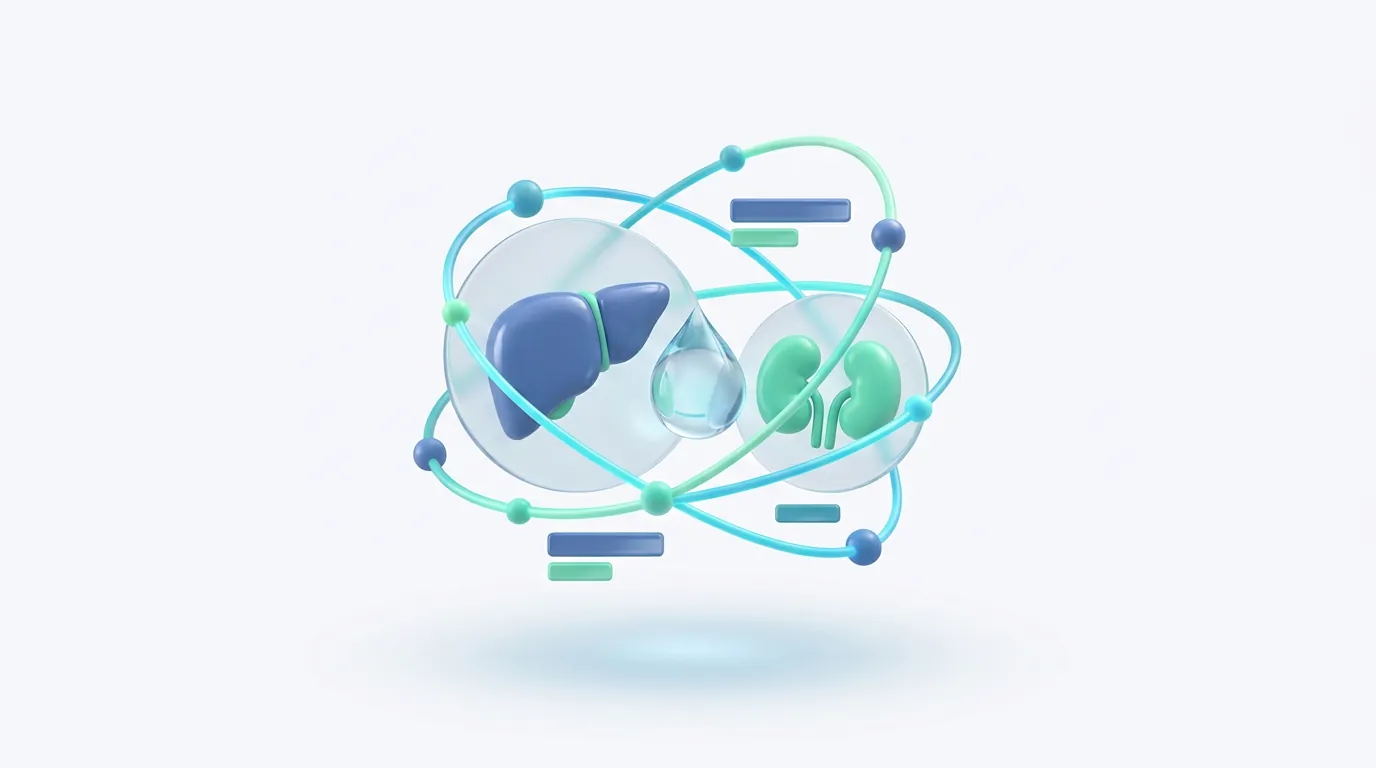
| The liver | Breaks down alcohol, medicines and waste into forms the body can remove |
|---|---|
| The kidneys | Filter about 180 litres of blood plasma a day and remove waste in urine |
| Detox products | No good evidence they remove toxins; some cause harm |
| What helps | Less alcohol, healthy weight, balanced diet, enough water, careful use of medicines |
| Blood tests | ALT, AST, GGT for the liver; creatinine and eGFR for the kidneys |
Built-in cleaning
Liver and kidneys work around the clock.
Careful with supplements
Some herbal and slimming products can injure the liver.

Your results over time
Keep liver and kidney tests in the app and see trends.
How does the liver remove toxins?
The liver filters blood coming from the gut and changes harmful substances in two main steps: first enzymes make them more reactive, then they are attached to other molecules so they dissolve in water or bile. They leave the body in urine or stool. The liver also processes alcohol, ammonia from protein, old red blood cells and most medicines.
How do the kidneys clean the blood?
Each kidney has about a million tiny filters called nephrons. Together they filter around 180 litres of blood plasma a day, reabsorb what the body needs, such as water, glucose and salts, and pass waste such as urea and creatinine into urine, usually 1–2 litres a day. They also control blood pressure, salt balance and red blood cell production.
Do detox diets and cleanses work?
There is no good evidence that detox teas, juices, foot pads or cleanses remove toxins or improve health, according to reviews by NIH's NCCIH and others. Any weight lost is mostly water and returns. Some products contain laxatives or diuretics, some herbal ones have injured the liver, and very large juice intakes can harm the kidneys.
What actually protects the liver and kidneys?
The everyday basics:
- Keep alcohol low, with alcohol-free days.
- Keep a healthy weight; excess fat in the liver is now the most common liver disease.
- Eat a balanced diet with less salt, sugar and ultra-processed food.
- Drink enough water.
- Use painkillers and supplements only as directed, and tell your doctor what you take.
- Keep blood pressure and blood sugar in check, as both protect the kidneys.
- Get vaccinated against hepatitis B when advised.
Which tests show how they are working?
Liver tests (ALT, AST, ALP, GGT, bilirubin, albumin) and kidney tests (creatinine, eGFR, urea, and urine albumin) are part of routine blood and urine panels. Your doctor reads them against the reference range on your report and your history. Keeping them over time shows trends.
Key terms
- Detoxification: the body's processing of harmful substances into forms it can remove.
- eGFR: estimated glomerular filtration rate, a measure of kidney filtering capacity.
- ALT and AST: liver enzymes that rise when liver cells are irritated or damaged.
- Nephron: the tiny filtering unit of the kidney.
- Fatty liver disease: excess fat in liver cells, often linked to weight and blood sugar.
Sources
- NIH NCCIH: "Detoxes" and "cleanses", what you need to know
- NIDDK: Your kidneys and how they work
- NIDDK: The liver
- NIH LiverTox: Herbal and dietary supplements
- UK Chief Medical Officers' low risk drinking guidelines
- WHO/Europe: No level of alcohol consumption is safe for our health (2023)
Frequently asked questions
Do I need to detox my body?
No. A healthy liver and kidneys do this continuously. If you are worried about your liver or kidneys, ask your doctor about blood tests.
Does lemon water detox the liver?
Lemon water is a fine drink, but it does not detox the liver.
What are signs of liver or kidney problems?
Often none early on. Later signs can include yellow skin or eyes, dark urine, swelling of the legs, changes in urination, itching or tiredness. See a doctor if you notice these.
Can supplements harm the liver?
Yes. Some herbal, bodybuilding and weight-loss supplements have caused liver injury. Tell your doctor about everything you take.
Does drinking more water help the kidneys?
Enough water helps the kidneys work and prevents some kidney stones. Very large amounts give no extra benefit.
How much alcohol is safe for the liver?
Less is better. UK guidance advises no more than 14 units a week, spread over several days, with alcohol-free days; WHO/Europe says no level of alcohol consumption is safe for our health.
Try it in Anpheros Daily
Note how you sleep, eat, feel and move in Anpheros Daily, next to your lab results, and see the patterns over weeks.

Anpheros builds a medical record that the patient controls and can share with any clinic, on an HL7 FHIR R4 platform, based in the EU. These guides help you understand and organise your health; they do not replace your doctor.
About Anpheros → Anpheros
The more you log, the clearer your record
Your health history in one place, under your control.
Free · Works in your browser · No card