In short: Anpheros Daily is a health condition tracking app for people living with a long-term condition or caring for someone who is. Each condition gets its own folder, and you link to it the symptoms, medicines, lab results, documents and appointments that belong to it. You see the course over weeks and months, and you share it with a doctor only when you choose. The app does not diagnose and does not recommend treatment.
Most people with a chronic condition keep its story in five places: a notes app, photos of lab reports, a paper list of medicines, the clinic portal and memory. The folder brings those pieces together, so "how has it been since the last visit?" has an answer you can show.
A folder per condition
Illness, long-term treatment, pregnancy or anything else you want to follow, each with its own name and color.
Everything linked
Symptoms, medicines, lab results, documents and appointments that belong to it, in one place.
The course over time
A timeline of the condition to show at the next visit, as a PDF or a time-limited link.
What you can track for each condition
The folder holds what you already record in the app, grouped by the condition it belongs to.
- Symptoms: what you feel, where, how strong and when, from the symptom tracker.
- Medicines: the treatment for this condition, with reminders, from the medication tracker.
- Measurements: blood pressure, weight, glucose and other readings you log.
- Lab results and documents: reports read from a photo, letters, discharge notes.
- Appointments: visits and tests linked to the condition, with the report afterwards.
A symptom or a medicine can belong to more than one condition. Linking is optional: you can keep logging as usual and sort later.
Which conditions people track
Anything that lasts weeks or longer and needs following: type 2 diabetes, high blood pressure, asthma, migraine, thyroid conditions, inflammatory bowel disease, long COVID, a course of physiotherapy, a pregnancy (with its own week-by-week screen). You choose the name; the app does not suggest or confirm a diagnosis.
At the doctor
Open the folder and the visit starts from facts: what changed since last time, which symptoms came back, which medicines you took and what the last results were.
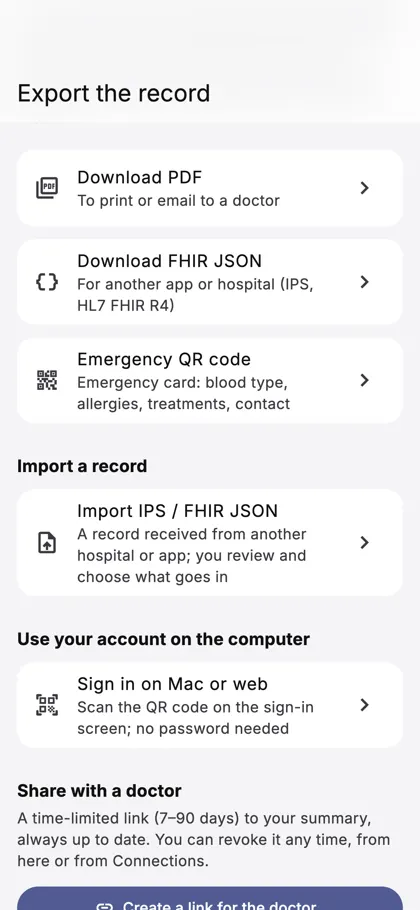
- Export a PDF of the record, or share a time-limited link your doctor can open.
- For another app or hospital, export HL7 FHIR / International Patient Summary, the open standard clinics use.
- You decide what the doctor sees and for how long; access can be revoked from Connections.
For the whole family
Parents and carers can keep a folder for each family member's condition, so a child's asthma or a parent's heart condition has its own history (family profiles are on the Plus and Max plans).
How to start
- Create a free account at app.anpheros.com, in the browser.
- Add a condition and give it a name.
- Link what you already logged, or start logging symptoms and medicines from today.
- Before the next visit, open the folder and export the PDF.
Frequently asked questions
What is a health condition tracking app?
An app where you follow one condition over time: symptoms, medicines, measurements, results and visits linked together, so you and your doctor see the course instead of isolated notes.
Is there a free app to track a chronic condition?
Yes. Anpheros Daily's Basic plan is free and includes conditions, the symptom diary and medicines for your own profile. Plus and Max add family profiles and more features.
Can I track more than one condition?
Yes. Each condition has its own folder, and one symptom or medicine can belong to several of them.
Does the app tell me what my condition is or how to treat it?
No. Anpheros Daily does not diagnose and does not recommend treatment. It keeps your information in order so you can discuss it with your doctor.
Where is my health data stored?
In the European Union, without advertising and without sale of data. Every doctor, clinic, app or AI assistant needs your approval to see it, and you can revoke access.
Can I share the condition history with my doctor?
Yes: as a PDF, a time-limited link, or an HL7 FHIR / IPS file for another system. You choose what to include.