In short: inflammation is how the body responds to injury and infection. Acute inflammation is fast and visible (a swollen ankle, a sore throat), does its job in days and switches off. Chronic inflammation is slow, often invisible, and keeps running for months or years at a low level; it is linked to heart disease, type 2 diabetes, some cancers and depression. The first is a friend; the second is what lifestyle, sleep, weight and stress quietly feed.
At a glance
| What it is | The immune system's response to damage or threat: more blood flow, immune cells on site, repair |
|---|---|
| Acute | Hours to days; redness, heat, swelling, pain; ends when the cause is handled |
| Chronic | Months to years; low-grade, often without obvious signs; keeps tissues under stress |
| Common drivers of chronic | Excess body fat, smoking, poor sleep, long-term stress, inactivity, persistent infections, autoimmune conditions |
| Blood tests that reflect it | CRP (and high-sensitivity CRP), ESR, white cell count; they show that inflammation is present, not why |
| What you can track | Sleep, activity, weight, symptom days, lab trends over time |

The five classic signs
Redness, heat, swelling, pain and loss of function: the body sending blood and cells to a problem.

Sleep turns it down
Short sleep raises inflammatory markers within days; good sleep lets the response reset.

Trends, not single values
One CRP reading says little; the same marker over years, next to your habits, says a lot.
What inflammation is
Inflammation is a protective response, not a disease: the immune system detects damage or an invader and sends blood, fluid and cells to deal with it. That is why an injured area turns red and warm (more blood), swells (fluid and cells leaking in) and hurts (nerves made more sensitive so you protect the spot). Once the threat is handled, special signals switch the response off and repair begins. Without inflammation, a cut would not heal and a cold would not end.
Acute inflammation: short, loud, useful
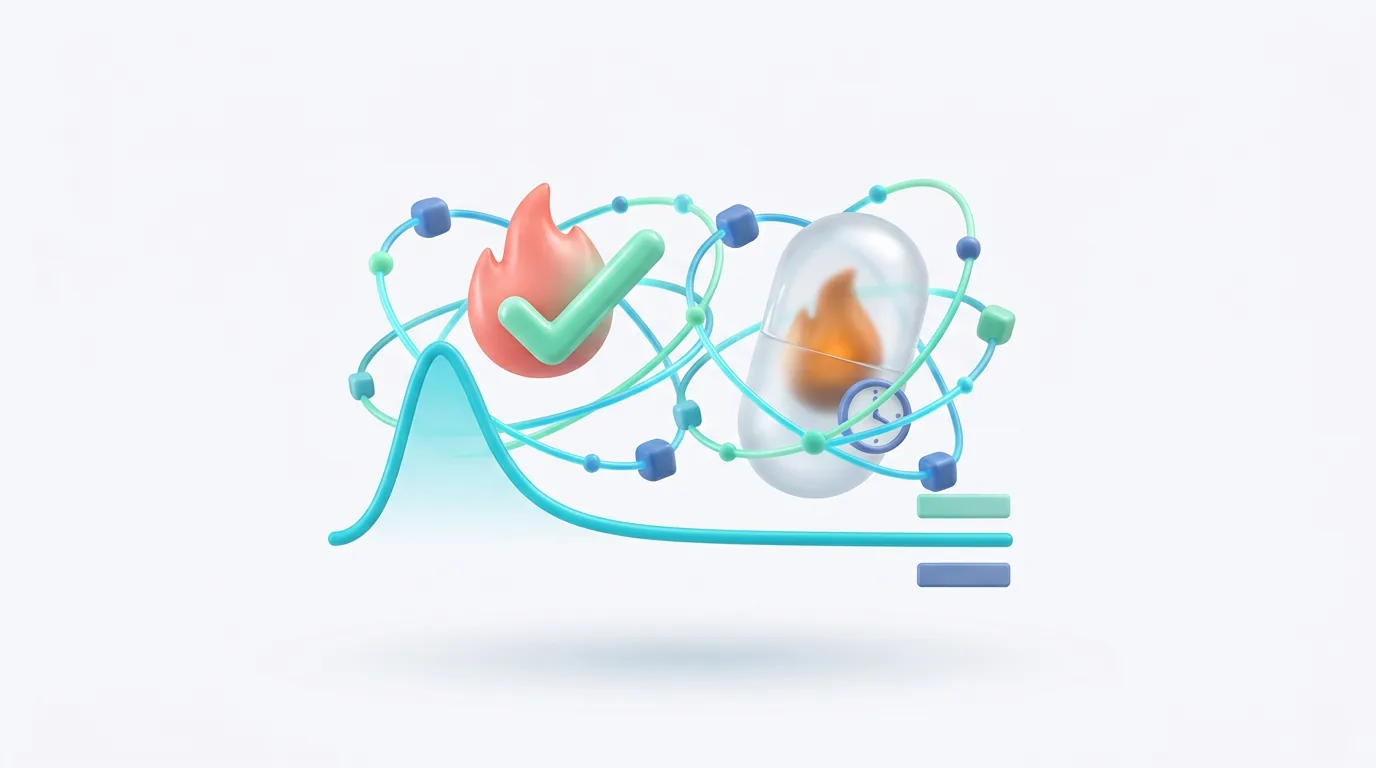
Acute inflammation starts within minutes, peaks in a day or two and resolves within days to a couple of weeks. A sprained ankle, a sore throat, a splinter, a vaccine's sore arm: all acute. The signs are obvious and the course is predictable: as the cause is removed, the swelling and pain fade. Fever is part of the same system, raising body temperature to slow down microbes. Acute inflammation that does not settle, or that keeps returning, is the body's way of saying the cause is still there, which is a reason to see a doctor rather than to wait.
Chronic inflammation: quiet, long, costly
Chronic inflammation is the response that never fully switches off. Instead of a sharp spike it runs at a low level for months or years, often with no visible sign at all. Over time that steady stress on blood vessels, joints and organs is associated with atherosclerosis, type 2 diabetes, fatty liver, some cancers, depression and faster ageing. It can start from an acute problem that was never resolved, from an autoimmune condition, or, most commonly, from everyday factors: excess body fat (fat tissue itself releases inflammatory signals), smoking, air pollution, persistent poor sleep, long-term psychological stress and physical inactivity.
How blood tests show it
Blood tests can show that inflammation is present, but not where it comes from. CRP (C-reactive protein) rises within hours of an acute problem and falls as it resolves; the high-sensitivity version (hs-CRP) picks up the low levels seen in chronic inflammation. ESR rises and falls more slowly. A white blood cell count rises in acute infection. All of them are interpreted by a doctor together with the story: a CRP of 40 after a flu means something different from a persistent 4. For how these tests are reported, see CRP and ESR explained.
What tends to lower chronic inflammation
Research on lifestyle and inflammatory markers points in a consistent direction: regular physical activity, enough sleep, not smoking, keeping body fat in a healthy range, a diet rich in vegetables, fruit, legumes, whole grains, nuts and fish, and limiting ultra-processed food and alcohol. None of these is a treatment for a specific disease, and none replaces care for an autoimmune or infectious condition; they are the background that makes the immune system's job easier. The effect is slow: markers move over weeks and months, which is why tracking matters more than any single reading.
What you can track yourself
Inflammation itself is not something you measure at home, but its drivers are: sleep hours and quality, activity, weight, alcohol, and the days you feel unwell or in pain. Kept next to your lab results over time, those records let you and your doctor see whether a change in habits is followed by a change in markers. Anpheros Daily keeps your immune system view (sleep, activity, recent illness, vaccines) and your lab results in the same record, so the trend is visible in one place.
This page explains how the body works; it does not diagnose or recommend treatments. For symptoms that worry you, talk to your doctor.
Key terms
- Acute inflammation: the fast, short-lived response to injury or infection that ends when the cause is handled.
- Chronic inflammation: a low-level response that persists for months or years and stresses tissues.
- CRP: C-reactive protein, a blood marker that rises when inflammation is present.
- Cytokines: signalling molecules immune cells use to start, amplify and stop inflammation.
- Resolution: the active process by which the body switches inflammation off and repairs tissue.
Related pages
- CRP and ESR: the two inflammation blood tests
- How immunity works
- Cortisol and stress
- How the lymphatic system works
- How to keep a health journal
Sources
- NIH, National Institute of Environmental Health Sciences: Inflammation
- NIH MedlinePlus: C-reactive protein (CRP) test
- WHO: Noncommunicable diseases, risk factors
- NHS: Inflammation and the immune system (Health A to Z: Fever in adults)
- Cochrane Library
Frequently asked questions
Is inflammation good or bad?
Both, depending on duration. Acute inflammation heals; it is essential. Chronic, low-grade inflammation that never switches off is associated with long-term disease.
Can I feel chronic inflammation?
Often not. Some people notice tiredness, aches or low mood, but many have no symptoms at all; it is usually found through blood tests and risk factors rather than felt.
Does an anti-inflammatory diet exist?
There is no single diet, but patterns rich in vegetables, fruit, legumes, whole grains, nuts and fish, and low in ultra-processed food, are consistently associated with lower inflammatory markers. Supplements are not a substitute; discuss them with your doctor.
What does a high CRP mean?
That inflammation is present somewhere. The level, the trend and your symptoms tell a doctor whether it is a passing infection or something to investigate; the number alone does not.
Does stress cause inflammation?
Long-term stress is associated with higher inflammatory markers, partly through cortisol and sleep. Short bursts of stress are not the problem; months of it are.
Should I track inflammation at home?
Track its drivers: sleep, activity, weight, alcohol and sick days, next to your lab results over time. That is what helps a doctor see a pattern.
Try it in Anpheros Daily
Note how you sleep, eat, feel and move in Anpheros Daily, next to your lab results, and see the patterns over weeks.

Anpheros builds a medical record that the patient controls and can share with any clinic, on an HL7 FHIR R4 platform, based in the EU. These guides help you understand and organise your health; they do not replace your doctor.
About Anpheros → Anpheros
The more you log, the clearer your record
Your health history in one place, under your control.
Free · Works in your browser · No card