Short answer: A CT (computed tomography) scan uses X-rays from many angles and a computer to build detailed cross-sectional images of the body. It is fast, often a few minutes. The report lists the technique (with or without contrast), the findings organ by organ and an impression; it is written by a radiologist for the doctor who asked for the scan.
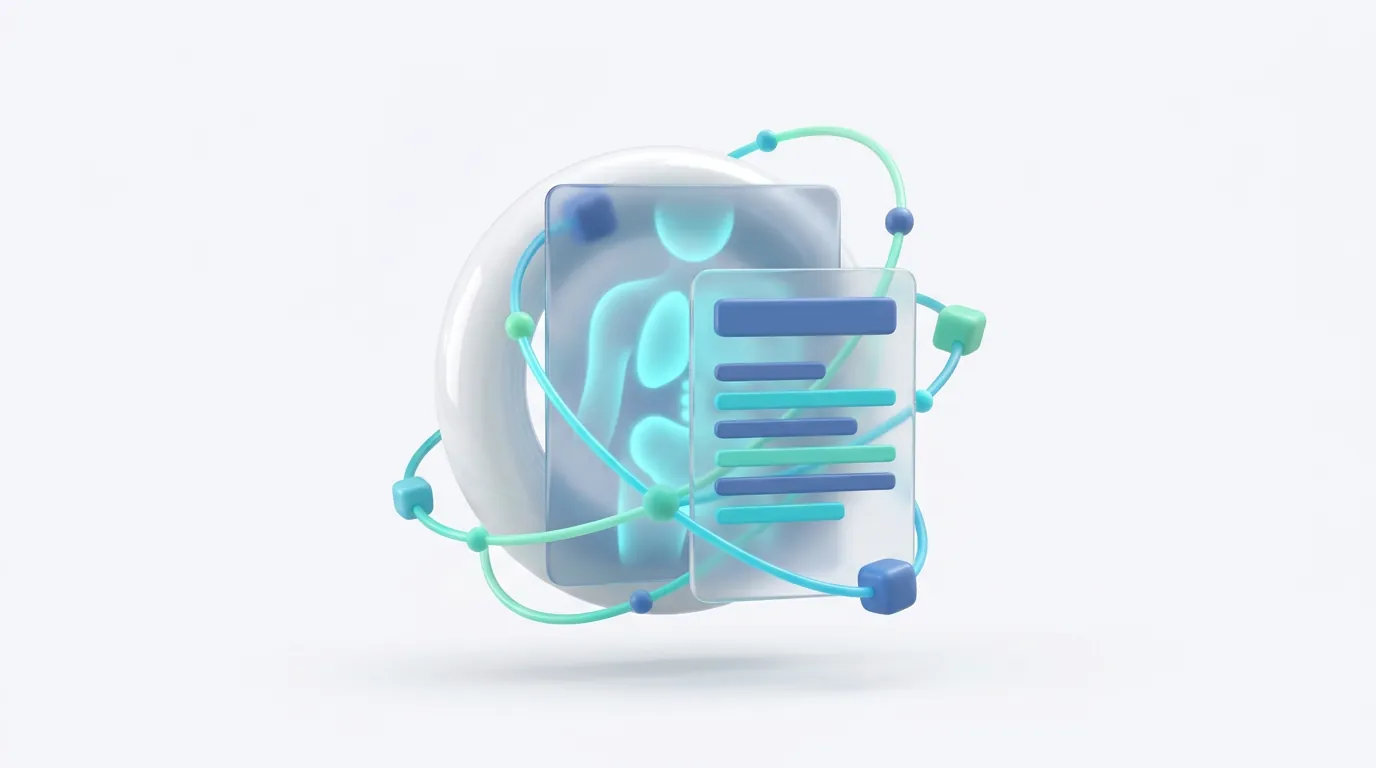
At a glance
| What it is | X-rays from many angles, built into cross-sectional images |
|---|---|
| Contrast | With or without an injected dye that highlights vessels and organs |
| Hounsfield units | The density scale: air −1000, water 0, bone up to +1000 and more |
| Report structure | Technique, comparison, findings organ by organ, impression |
| Keeping it | Report and DICOM images with the date |
| What this page does not do | Interpret your report |
How it is done
You lie on a table that moves through a ring-shaped scanner. For some scans a contrast agent is given into a vein or to drink, which makes vessels and organs stand out; tell the team about kidney problems, allergies, diabetes medicines and pregnancy. CT uses a dose of radiation, which is weighed against the benefit of the scan.
What the report contains
| On the report | Unit | What it describes |
|---|---|---|
| With / without contrast | — | whether a contrast agent was used, and in which phase |
| Attenuation / density | Hounsfield units (HU) | how much a tissue absorbs X-rays (water ≈ 0 HU, air ≈ −1000) |
| Nodule / lesion / opacity | mm | a spot or area that looks different; size and features are described |
| Incidental finding | — | something found by chance, unrelated to the reason for the scan |
| Comparison | date | the earlier scan the radiologist compared with |
| Impression / conclusion | — | the radiologist's summary |
"Comparison: none available" is common when the radiologist has no earlier scan; giving the hospital your previous reports and images (DICOM) helps. Incidental findings are frequent and usually benign; recommendations about them are discussed with your doctor.
Keeping the report in your record
In Anpheros Daily you photograph the report or upload the PDF, and it goes into Documents under the person it belongs to, linked to the appointment it came from, next to the referral and the doctor's letter. On the Plus and Max plans "Read with AI" gives a plain-language summary and explains the terms, with the sentence each explanation came from marked; it stays labelled as AI, separate from what the specialist wrote. In the record the report is stored as an HL7 FHIR document, so you can share it with any doctor for a period you choose. Our guide on sharing your record with a clinic explains how.
What this page does not do
It explains what the investigation is and how its report is usually organised. It does not interpret your report or images, diagnose or recommend treatment. Reading the recording or images is the specialist's job; deciding what the report means for you is your doctor's.
Related pages
- How to get your CT or MRI images (DICOM) from the hospital and view them
- X-ray report explained
- Ultrasound scan report explained
Sources
Frequently asked questions
What is the difference between CT with and without contrast?
Contrast makes blood vessels and some organs stand out. Whether it is needed depends on the question being asked.
What are Hounsfield units?
The scale CT uses for how much tissue absorbs X-rays: water is about 0, air about −1000, bone several hundred or more.
What is an incidental finding?
Something seen by chance, unrelated to why the scan was done. Many are harmless; your doctor decides on follow-up.
Should I keep my CT images as well as the report?
Yes, if you can. Radiologists compare new scans with earlier images, not just reports. Our guide on getting your scan images explains how.
Try it in Anpheros Daily
Keep your scan and test reports in one place in Anpheros Daily, ready to show at your next visit.
How it works in the app →
Anpheros builds a medical record that the patient controls and can share with any clinic, on an HL7 FHIR R4 platform, based in the EU. These guides help you understand and organise your health; they do not replace your doctor.
About Anpheros → Anpheros
The more you log, the clearer your record
Your health history in one place, under your control.
Free · Works in your browser · No card