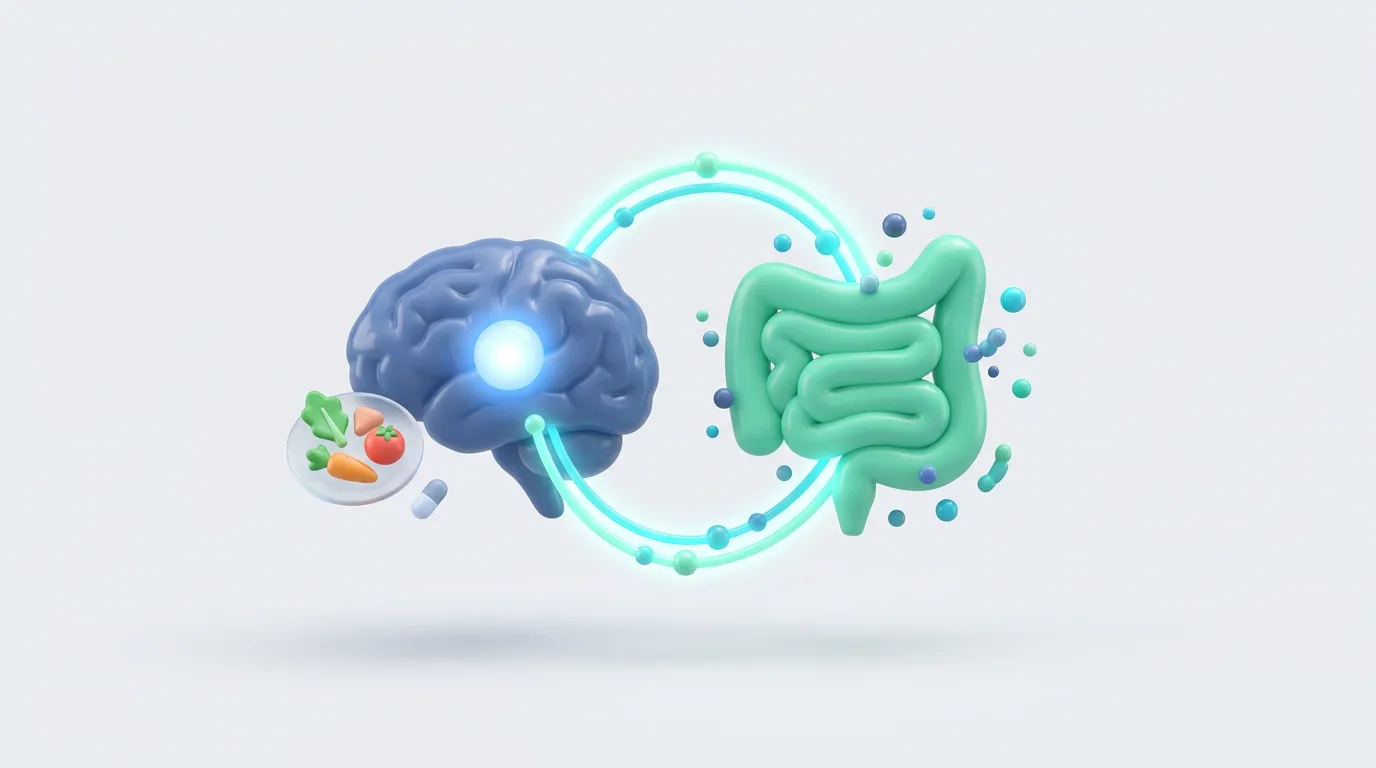
In short: the gut and the brain are in constant two-way conversation. The vagus nerve carries signals both ways within seconds; hormones from the gut tell the brain about hunger and fullness; the immune system in the gut wall reports on inflammation; and the trillions of bacteria in the gut produce molecules (short-chain fatty acids, neurotransmitter precursors) that reach the blood and the nervous system. That is why stress gives you butterflies or diarrhoea, and why gut problems come with low mood. What is established is the connection; what is still early is how much changing the microbiome changes the mind.
At a glance
| The channels | Vagus nerve, gut hormones, immune signals, and metabolites made by gut bacteria |
|---|---|
| Brain → gut | Stress slows or speeds digestion, changes blood flow and gut secretions, alters the microbiome |
| Gut → brain | Hunger and fullness signals, inflammation signals, bacterial metabolites that affect mood and sleep |
| The microbiome | Trillions of microbes, mostly bacteria, that digest fibre, make vitamins and short-chain fatty acids, and train the immune system |
| Established | The connection itself; stress–gut symptoms; diet shapes the microbiome within days |
| Still early | Probiotics for mood, specific 'good' bacteria, microbiome tests to guide diet |

Butterflies are real
The same stress response that readies muscles diverts blood from the gut and changes its motility within minutes.

Fibre feeds the messengers
Gut bacteria turn fibre into short-chain fatty acids that calm gut inflammation and signal to the brain.

Sleep runs both ways
Poor sleep changes the microbiome; some bacterial products affect sleep. Both improve together.
The channels between gut and brain
The connection runs on four tracks. The vagus nerve is the main cable: it carries signals from the gut wall to the brainstem (fullness, stretch, irritation) and back (secretions, movement) in a fraction of a second. Gut hormones released after eating (such as GLP-1, PYY and ghrelin before meals) travel in the blood and tell the brain when to stop or start eating. The gut wall holds most of the body's immune cells, and their inflammatory signals reach the brain and affect energy and mood, which is why a stomach infection makes you feel low as well as sick. And the microbiome produces molecules, from short-chain fatty acids to the building blocks of neurotransmitters, that enter the circulation. Most of the body's serotonin is made in the gut, although it acts there rather than in the brain.
From brain to gut
Stress is the clearest example. The fight-or-flight response shifts blood away from digestion, changes gut movement (slower in some people, faster in others), alters secretions and makes the gut wall more sensitive, so normal sensations feel like pain. Over weeks, stress also shifts the balance of gut bacteria. This is the mechanism behind exam-day diarrhoea, a knotted stomach before a difficult conversation, and the way symptoms of irritable bowel flare in stressful periods. See Cortisol and stress.
From gut to brain
The other direction is where most of the new research sits. Gut bacteria ferment fibre into short-chain fatty acids such as butyrate, which feed the cells of the gut lining, lower inflammation and appear to influence the brain through the vagus nerve and the blood. In animal studies, changing the microbiome changes behaviour; in humans, people with depression and anxiety tend to have different gut bacteria from people without, and inflammatory bowel conditions come with higher rates of low mood. What is not yet shown is that changing the bacteria on purpose reliably changes mood in people in general.
What the microbiome does, and how fast it changes
The microbiome digests what we cannot (fibre), makes some vitamins (K and several B vitamins), trains the immune system, competes with harmful microbes and helps regulate the gut barrier. It is shaped mostly by diet, and it responds fast: a switch to a high-fibre or a high-fat, low-fibre diet changes the bacterial mix within days. Antibiotics disrupt it for weeks to months. Diversity, many different species, is generally associated with better health, and the surest way to feed it is a varied, plant-rich diet with plenty of fibre and fermented foods. See Digestive health: fibre and probiotics.
What the evidence does and does not support
Supported: stress affects digestion; diet reshapes the microbiome quickly; fibre and fermented foods are associated with a more diverse microbiome and lower inflammation; gut conditions and mood disorders overlap. Promising, early: certain probiotic strains improving mood or anxiety in some trials, with small effects and inconsistent results; the vagus nerve as a treatment target. Not supported: consumer microbiome tests that tell you what to eat; "gut cleanses"; the idea that a specific supplement fixes mood through the gut. Anyone with persistent gut symptoms or persistent low mood should talk to a doctor; both are treatable, and neither is explained away by the other.
What you can track
The gut–brain axis is easiest to see in your own data: meals, gut symptoms, mood, sleep and stressful days, kept side by side over a few weeks. Patterns such as symptoms the day after poor sleep, or mood dips in weeks of low-fibre eating, become visible in a diary long before they would in a test. Anpheros Daily's food tracker and symptom diary record both sides, and the timeline puts them together.
This page explains how the body works; it does not diagnose or recommend treatments. For symptoms that worry you, talk to your doctor.
Key terms
- Gut–brain axis: the two-way communication between the digestive system and the nervous system.
- Vagus nerve: the main nerve linking the brainstem with the heart, lungs and gut.
- Microbiome: the community of microbes living in the gut, and their genes.
- Short-chain fatty acids: molecules such as butyrate made when gut bacteria ferment fibre.
- Probiotic: live microbes that, in adequate amounts, have a demonstrated health effect; the evidence is strain- and condition-specific.
Related pages
- Digestive health: fibre, probiotics and the gut
- Cortisol and stress
- The nervous system and stress
- How digestion works
- How to track symptoms for your doctor
Sources
- NIH, National Center for Complementary and Integrative Health: Probiotics, what you need to know
- NIH, National Institute of Diabetes and Digestive and Kidney Diseases: Your digestive system and how it works
- NHS: Probiotics
- Cochrane: Probiotics for depression and anxiety (reviews)
- EFSA: Dietary reference values for fibre (carbohydrates and dietary fibre)
Frequently asked questions
Is serotonin really made in the gut?
About 90% of the body's serotonin is made in the gut, but it works there (on movement and secretions) and does not cross into the brain. The gut influences brain serotonin indirectly, through nerves, immunity and metabolites.
Can probiotics improve my mood?
Some trials with specific strains show small improvements in mood or anxiety; others show none. The effect, if any, is strain-specific and modest. They are not a treatment for depression; talk to a doctor about persistent low mood.
Why does stress give me stomach problems?
The stress response diverts blood from digestion, changes gut movement and makes the gut wall more sensitive, so ordinary sensations become cramps, urgency or nausea.
Do microbiome tests tell me what to eat?
Not reliably. They describe which bacteria are present, but there is no agreed 'healthy' profile and no validated way to turn the result into a personal diet. A varied, fibre-rich diet is the evidence-based advice for most people.
How quickly does diet change the microbiome?
Within days for a major change in fibre or fat, with the mix stabilising over weeks. Antibiotics disrupt it for weeks to months.
Should I keep a food and mood diary?
If you have recurring gut symptoms or mood swings, yes, for a few weeks: meals, symptoms, sleep and stress side by side show patterns a doctor can use.
Try it in Anpheros Daily
Note how you sleep, eat, feel and move in Anpheros Daily, next to your lab results, and see the patterns over weeks.

Anpheros builds a medical record that the patient controls and can share with any clinic, on an HL7 FHIR R4 platform, based in the EU. These guides help you understand and organise your health; they do not replace your doctor.
About Anpheros → Anpheros
The more you log, the clearer your record
Your health history in one place, under your control.
Free · Works in your browser · No card