In short: today, in the EU, you can ask any provider for a copy of your record (GDPR) and carry it yourself, ideally as a structured summary. From 26 March 2029 the EHDS makes the patient summary and e-prescriptions exchangeable across EU countries through national services, and from 2031 also images, lab results and discharge reports. Until then, a personal record in an open format bridges the gap.
Portability is one of the four parts of health transparency: your history should follow you, not stay in the building where it was written.
What you can do today
- Ask for a copy from each provider that treated you, in writing, citing Article 15 of the GDPR. They have one month, which the provider can extend by up to two more months for complex requests, if it tells you why. If you ask electronically, you get the copy in a commonly used electronic form (Article 15(3)). The right to portability in a structured, machine-readable format (Article 20) applies only to data processed on your consent or a contract, which is often not the legal basis hospitals use; ask anyway.
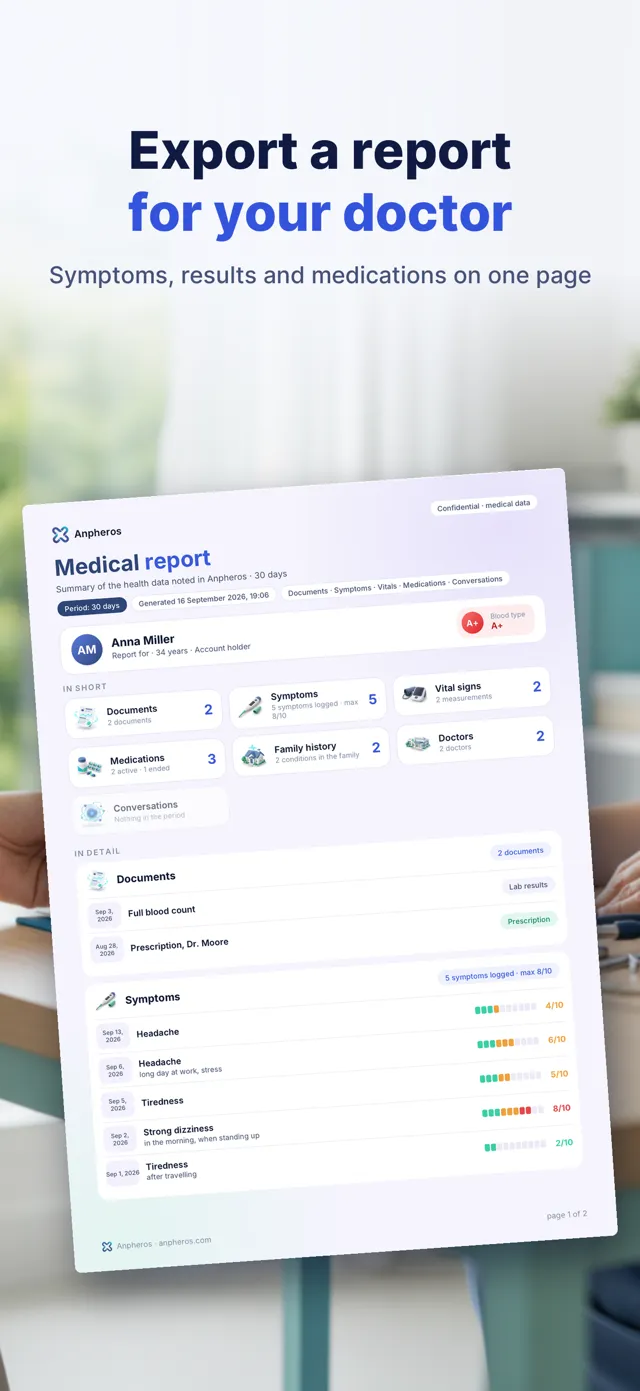
- Keep a summary of what matters most: allergies, current medications, conditions, vaccinations, recent results. The International Patient Summary is the international format for exactly this.
- Share it on your terms with the next doctor: a PDF, a FHIR file, or a link that expires.
Step-by-step: how to transfer your medical records and how to share your record with any clinic.
What changes with the EHDS
- 26 March 2029: patient summaries and e-prescriptions must be accessible electronically and exchangeable between EU countries, in a common European format.
- 26 March 2031: medical images, laboratory results and discharge reports follow.
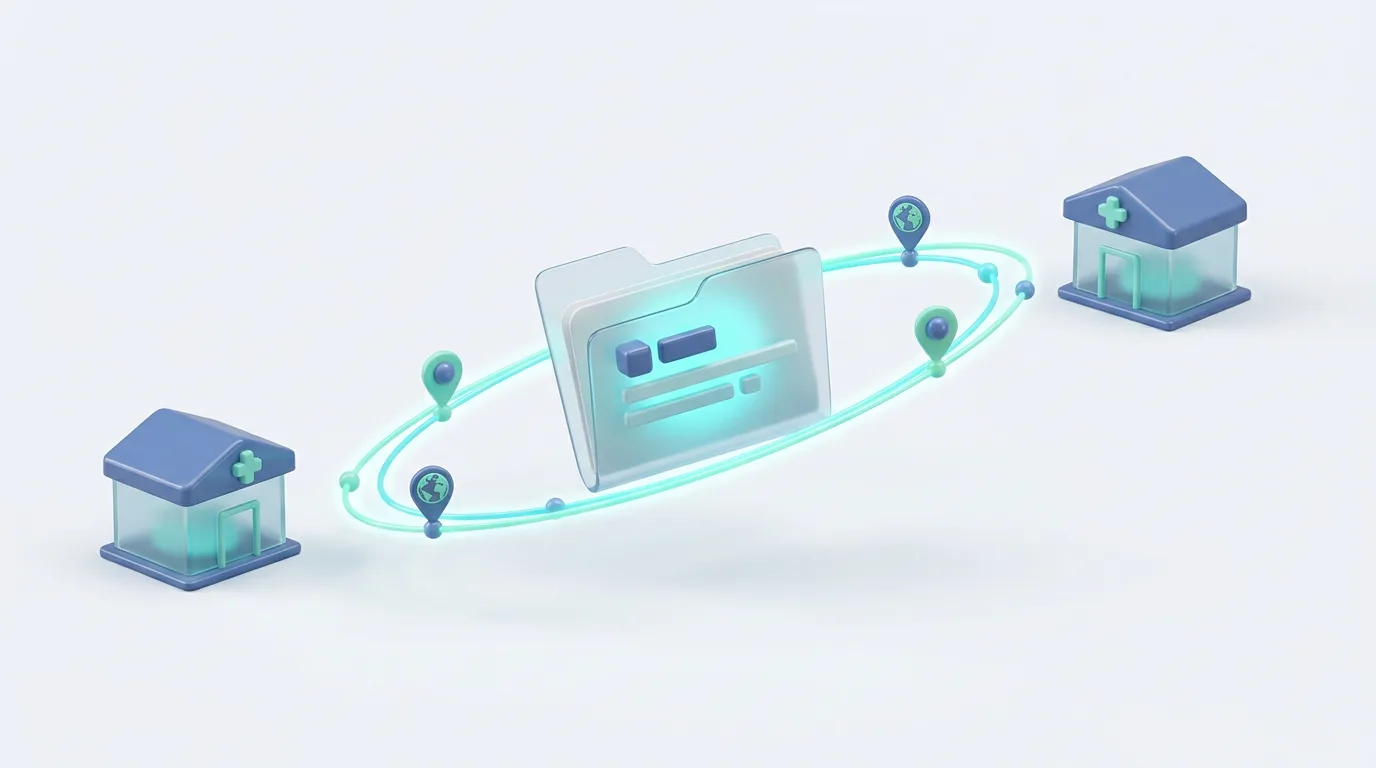
- Exchange runs through MyHealth@EU, the EU infrastructure that already links national contact points of connected countries for summaries and prescriptions.
The options, compared honestly
| What it is | What it does for portability | Limits | |
| MyHealth@EU | EU infrastructure between national health systems | Your summary and e-prescriptions can be read by a doctor or pharmacist in another connected country | Works through your country's system; categories and countries expand gradually to 2029/2031 |
| National patient portals | Your country's official online record (names differ by country) | Official copy of what public providers recorded; often the source for MyHealth@EU | Usually one country; private clinics and older records may be missing |
| Apple Health / Health Connect | Health data stores on your phone | Collect data from apps and devices; some regions import records from providers | Mainly phone and device data; sharing with clinics depends on region |
| Anpheros Daily | A personal health record you control | Your record in HL7 FHIR R4, IPS export (PDF/FHIR), time-limited links for doctors, access requests from clinics on Anpheros Platform | Not connected to MyHealth@EU or national systems; you add or import the data |
These tools do different jobs and can work together: the national system holds the official record, MyHealth@EU carries parts of it across borders, and a personal record keeps everything (including private clinics and your own notes) in one place you control.
Frequently asked questions
Can I take my medical records to another EU country?
Yes. Under the GDPR you can get a copy and take it with you. Between connected countries, MyHealth@EU already lets doctors read patient summaries; under the EHDS this becomes mandatory for summaries and e-prescriptions from 26 March 2029 and for images, lab results and discharge reports from 26 March 2031.
What format should I ask for?
A structured, electronic one if possible: the International Patient Summary, or HL7 FHIR. A PDF is better than paper, but structured data can be read by the next system without retyping.
Is my clinic obliged to send my records to another clinic?
You can always get a copy yourself (GDPR Article 15). Direct exchange between providers depends on national rules today; the EHDS extends it across the EU in stages from 2029.
Does Anpheros send my record through MyHealth@EU?
No. Anpheros is not connected to MyHealth@EU or to national systems. You share your record from the app with a link, a PDF or a FHIR file, or by approving a clinic's access request.
Try it in Anpheros Daily
In Anpheros Daily you decide who can open your record and for how long, and you can switch any access off.
How it works in the app →
Anpheros builds a medical record that the patient controls and can share with any clinic, on an HL7 FHIR R4 platform, based in the EU. These guides help you understand and organise your health; they do not replace your doctor.
About Anpheros → Anpheros
The more you log, the clearer your record
Your health history in one place, under your control.
Free · Works in your browser · No card