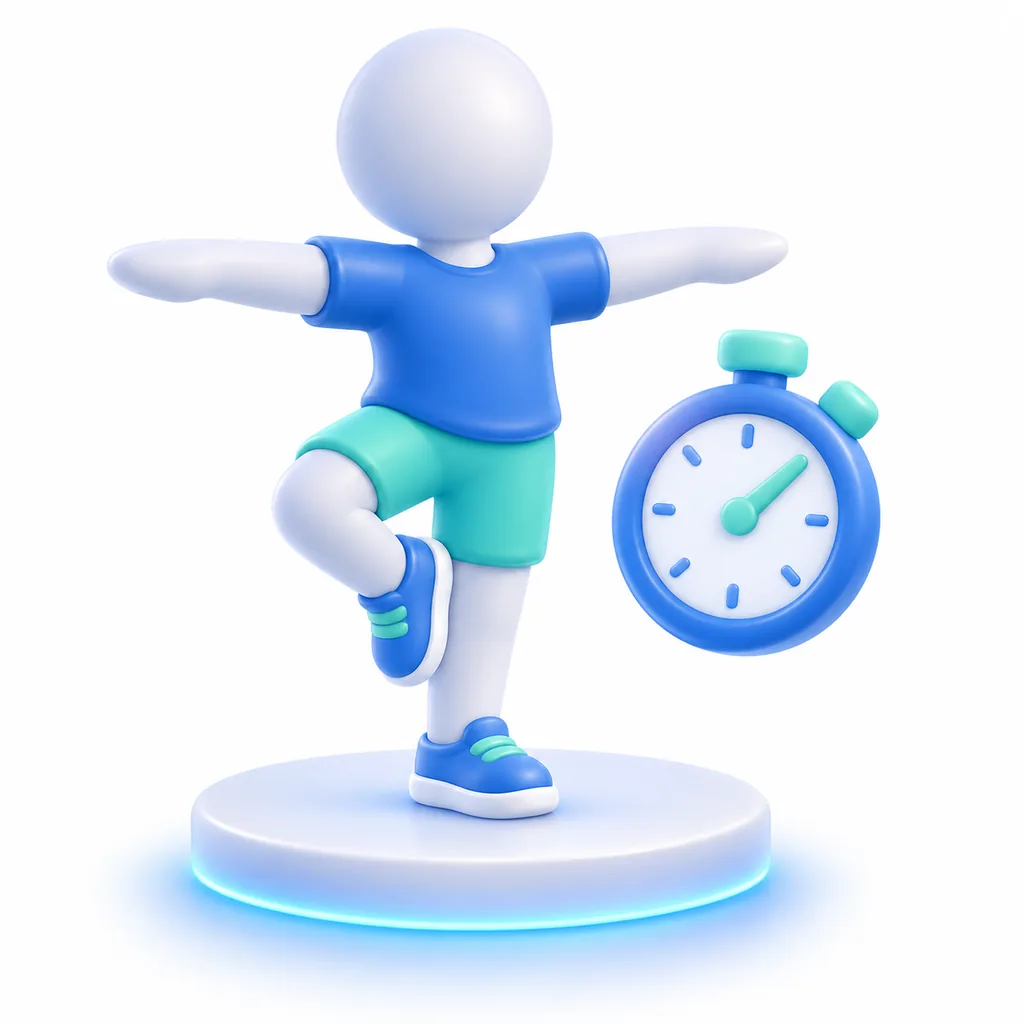
In short: the 3-minute step test measures aerobic fitness from how fast your heart settles after a short, fixed effort. You step up and down a 30 cm (12 inch) step at 24 steps a minute for three minutes, sit down, and count your pulse for one full minute. A lower pulse after the same effort usually means better fitness. This page plays the 96 bpm beat and times both parts; your own trend from one test to the next is the useful number. It describes fitness, not heart health.
The test comes from the YMCA fitness programme and is used by trainers and researchers because it needs no treadmill or lab, only a step and a watch. Everyone does the same work, so the difference between people shows in the recovery: a fitter heart pumps more blood per beat and slows down sooner.

The beat, built in
A 96 bpm click with "up, up, down, down" on screen keeps you at exactly 24 steps a minute.
Pulse timer
The minute for counting your pulse starts by itself five seconds after you stop.

Your own trend
Keep your result and compare it with the next test on the same step.
How to do the test
- Find a sturdy step or bench about 30 cm (12 inches) high. A bottom stair is often close; check it with a tape measure, since height changes the result.
- Rest for a few minutes and put on comfortable shoes. Turn your volume up so you hear the beat.
- Step to the beat for 3 minutes: right foot up, left foot up, right foot down, left foot down. Each click is one foot. You can change the leading foot halfway.
- Sit down as soon as the 3 minutes end. Find your pulse on your wrist or neck; the one-minute count starts by itself after 5 seconds.
- Count every beat for the full minute, then type the number.
If you wear a heart-rate watch or chest strap, you can read the average heart rate for that minute instead of counting.
What changes the number
Medicines that slow the heart, such as beta blockers, give a low pulse whatever your fitness, so the result says little about fitness. Caffeine, heat, stress, poor sleep, a recent illness, a step of the wrong height or falling off the beat all push the pulse up. Counting is the most common error: count for the whole minute, not 15 seconds times four, if you can.
For training by heart rate rather than testing, the heart-rate zone calculator gives your five zones from your age and resting pulse.
Sources
Frequently asked questions
What is a good result on the 3-minute step test?
A lower pulse in the minute after the test means your heart settled faster. Published YMCA tables rate the result by age and sex, but versions of those tables differ, so this page does not rate you: compare your result with your own earlier tests on the same step.
Why 96 beats per minute?
Each beat is one foot movement, and a full step is four movements (up, up, down, down). 96 beats a minute gives 24 full steps a minute, the pace of the YMCA protocol.
How often should I repeat it?
Every two or three months, on the same step, at the same time of day and in the same conditions. A falling pulse over months is the sign your fitness is improving.
Who should not do the step test?
Anyone with a heart condition, chest pain, uncontrolled high blood pressure, a knee, hip or ankle injury, during pregnancy, or when unwell. Stop at once if you feel chest pain, dizziness or unusual breathlessness, and seek medical advice.
Is this a heart test?
No. It estimates aerobic fitness. It cannot detect or rule out heart disease; if you have symptoms on exertion, see a doctor.
 Anpheros
The more you log, the clearer your record
Your health history in one place, under your control.
- Symptom diaryPatterns show over time
- Emergency cardQR in your phone's Wallet
- All your resultsLabs and reports together
- You decideWho sees what, and for how long
Free · Works in your browser · No card