In short: MyChart has no direct alternative because it is not an app you choose: it is the patient portal of a hospital that uses Epic, and it shows that hospital's record. If your provider uses another system you get its portal instead; if you have several providers, moved, or want a record that is yours, the alternative is a personal health record app fed by the portals; in Europe the national record often does part of that job.
At a glance
| What MyChart is | Epic's patient portal: the hospital's record of you, not yours |
|---|---|
| If your provider is not on Epic | Its vendor's portal (Oracle Health, FollowMyHealth, athenaPatient, Healow…); you do not get to choose |
| Several providers, moves, countries | A personal health record app that collects every portal, scan and measurement in one record you control |
| In Europe | The national record (ePA, Mon espace santé, FSE, NHS App, ELGA, IKP) plays the role MyChart plays in the US |
| Getting your data out | PDF, a C-CDA document, or FHIR through the hospital's API; keep the MyChart account for new results |
| Family | Proxy access granted by the hospital, or several profiles in one personal health record account |
Searches for a MyChart alternative usually come from one of three situations: a provider that does not offer MyChart, records scattered across several portals, or the wish to hold the record yourself rather than in a hospital's system. Each has a different answer. This guide explains what a patient portal is and is not, lists the portals you will meet instead of MyChart, and shows how a personal health record fits with them. Anpheros Daily is one of the apps named; we say what it does and does not do.
What MyChart is, and what it is not
MyChart is the patient-facing portal of Epic, the electronic health record used by many large hospitals in the United States and by a growing number in Europe. Through it you see the results, visit notes, medications, appointments and messages of the health systems that use Epic, and you can link several of them in one login. It is free to patients and is paid for by the hospital.
What it is not is your record. The data belongs to the hospital's system; if your next doctor uses a different vendor, that doctor's results appear in another portal, and if you move country, the portal stays behind. MyChart cannot hold what you measure at home beyond a few tracked values, has limited room for your own notes, and shows a family member only if the hospital has granted proxy access.
If your provider does not use Epic: the other portals
The alternative to MyChart for a given hospital is whatever portal its vendor provides, and you do not get to choose it. The common ones are Oracle Health (formerly Cerner) portals, FollowMyHealth (Veradigm/Allscripts), athenaPatient (athenahealth), Healow (eClinicalWorks) and NextGen's portal; many smaller practices use the portal bundled with their practice software.
All of them do roughly the same job as MyChart (results, appointments, messages, bill payment) with less polish and fewer linked organisations. Under United States rules, each must let you download your record and connect a third-party app through a standard API (FHIR, defined by the US Core profiles), which is the door a personal health record uses to collect from all of them. In the European Union the equivalent right is in the GDPR and, from 2027 onwards, the European Health Data Space.
If you have several providers: a personal health record
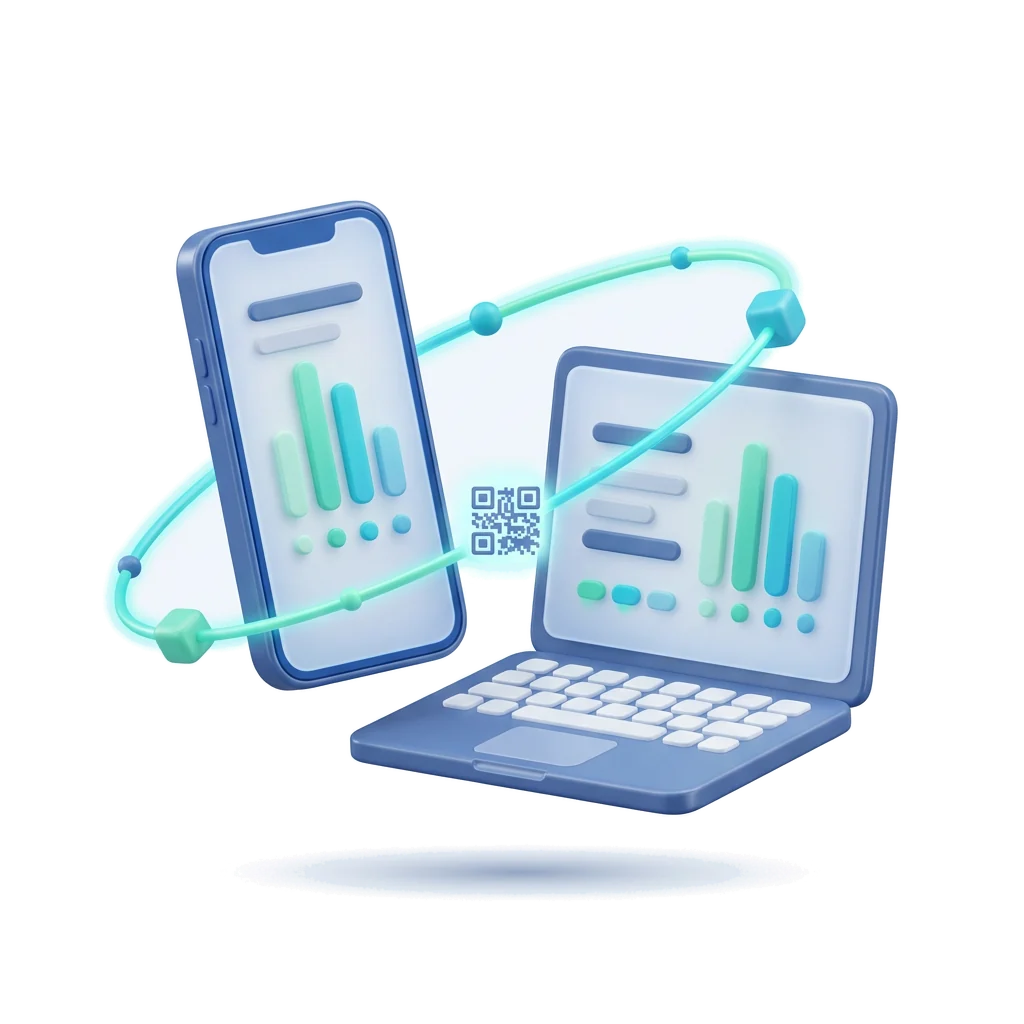
A personal health record (PHR) app is the alternative when the problem is fragmentation: it collects what each portal holds, plus what you measure and scan yourself, into one record you control, on any phone and on the web, and lets you share it with any clinic for a limited time. The portals remain the source for what each hospital produces; the PHR is where it all meets.
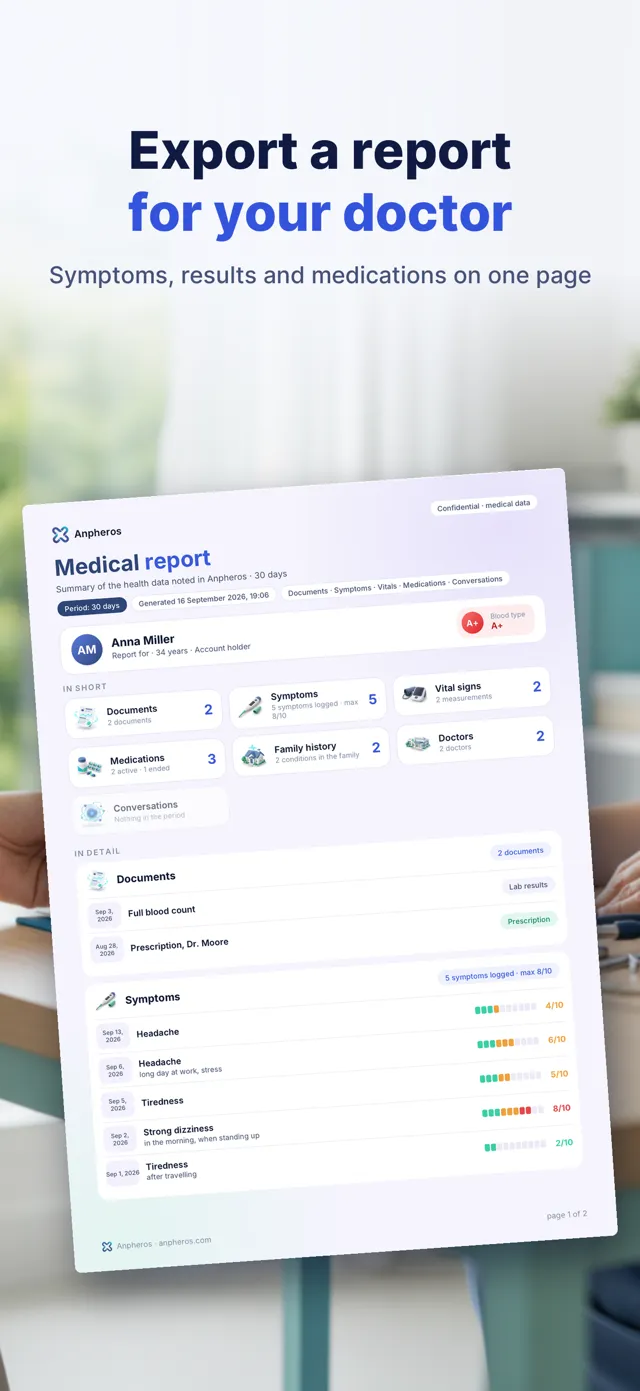
Anpheros Daily is a PHR built on the FHIR R4 standard: it holds labs, medications, allergies, vaccinations, diagnoses and documents for the whole family in one account, imports measurements from Apple Health and Health Connect, produces an International Patient Summary any clinic can read, and shares a record with a clinic for a period you set, with every access listed. It does not connect to MyChart automatically today: results come in by scanning the report or by importing the FHIR or PDF files the portal lets you download.
How to choose between PHR apps is in Best Medical Records Apps 2026: How to Choose One; what a PHR is, compared with the hospital's record, is in Personal Health Record (PHR): Meaning, Apps & Templates.
If you are in Europe: the national record
In most EU countries and the United Kingdom, the role MyChart plays in the United States is played by a national or regional record run by the health system: Germany's ePA, France's Mon espace santé, Italy's FSE, Spain's regional records, the Netherlands' MedMij apps, the NHS App in England, Austria's ELGA, Poland's IKP. Hospitals file into it, it is free, and it is yours by law to read; some hospitals in Europe offer MyChart in addition, for their own patients.
These records are more complete than a single portal but still bound to one country. Moving between EU countries is being solved by MyHealth@EU for the patient summary and ePrescription; for everything else, a PHR that exports in FHIR is what travels with you. Our map of National electronic health records: Europe and the US compared describes each country's record and how to get access.
Comparison table
| MyChart (Epic portal) | Other vendor portals | Personal health record app (e.g. Anpheros Daily) | National record (EU, UK) | |
|---|---|---|---|---|
| Whose record is it | The hospital's (Epic customers) | The hospital's | Yours | The health system's, legally yours to read |
| Covers | Every linked Epic organisation | One organisation, usually | Every provider, through downloads, scans and imports | Every provider in the country that files |
| Your own measurements and notes | A few tracked values | Rarely | Yes, including wearables | Rarely |
| Family | Proxy access granted by the hospital | Proxy access, if offered | Several profiles in one account | Children sometimes |
| Works after you change provider or country | No, new portal | No | Yes | No, new country new record |
| Download your record | Yes (PDF, C-CDA; FHIR via apps) | Yes, required in the US | Yes, FHIR R4 and International Patient Summary | PDF, CDA, sometimes FHIR |
| Share with a doctor outside the system | Share Everywhere, time-limited code | Varies | Time-limited sharing with an access log | By the system's rules |
| Cost | Free | Free | Free tier; paid plans for extra features | Free |
Details for products other than Anpheros are as published by their makers in October 2026; check the current pages before relying on them.
How to get your data out of MyChart
MyChart lets you download your record in several ways: a visit summary or the whole record as a PDF, a C-CDA document (the US standard clinical document, which other systems can import), and, through the hospital's FHIR API, structured data that apps such as Apple Health Records read with your login. Download the C-CDA or FHIR version when you can; the PDF is readable but not importable.
Once out, the lab results, medications, allergies and immunizations are the part to move into a record you keep. Scanning the PDF works for a handful of reports; for a long history, import the structured file. Keep the MyChart account: it continues to show new results from that hospital, and the PHR is where you bring them together. Our guide on How to Transfer Medical Records to a New Doctor covers the same steps when you change doctor or country.
Related pages
- Best Medical Records Apps 2026: How to Choose One: eight criteria for choosing a medical records app.
- Personal Health Record (PHR): Meaning, Apps & Templates: what a personal health record is and how it differs from the hospital's record.
- Health Records Online: How to Access & Keep Yours: how to access your records online in the EU, UK and US.
- National electronic health records: Europe and the US compared: the national records in Europe and the US, who runs them and how to connect.
- Apple Health Alternatives 2026: Android, Family, Export: the alternatives when the problem is the phone rather than the hospital.
Sources
- Epic: MyChart
- ONC: Patient access to health records (HealthIT.gov)
- HL7 FHIR US Core Implementation Guide
- European Commission: European Health Data Space
- HL7 FHIR International Patient Summary
Frequently asked questions
Is there an app like MyChart that works with any hospital?
Not as a portal: each portal shows the record of the hospitals that use its vendor. An app that works with any hospital is a personal health record, which you fill from each portal's downloads, from scans and from your own measurements, and which stays with you when providers change.
Can I use MyChart in Europe?
Only if your hospital uses Epic and offers MyChart to its patients, which some hospitals in the Netherlands, Denmark, Finland, the United Kingdom and a few other countries do. For the rest, the national or regional record (ePA, Mon espace santé, FSE, NHS App, ELGA, IKP) is where your hospital data appears.
What is the difference between a patient portal and a personal health record?
A patient portal is the hospital's window onto its own record of you; a personal health record is a record you hold, fed by portals, scans, devices and your own entries, that you can share with any clinic. Most people need both: the portal for what the hospital produces, the PHR for the record that follows them.
Can MyChart export my data in FHIR?
Yes, indirectly: US hospitals must expose a FHIR API that apps can connect to with your MyChart login, which is how Apple Health Records and other apps import your data. From the portal itself you download PDFs and C-CDA documents; the C-CDA is the one other systems can import.
Try it in Anpheros Daily
Anpheros Daily brings every portal together: import or scan what MyChart and the other portals hold, add your own measurements, and keep one record that stays with you when you change provider or country.
How it works in the app →
Anpheros builds a medical record that the patient controls and can share with any clinic, on an HL7 FHIR R4 platform, based in the EU. These guides help you understand and organise your health; they do not replace your doctor.
About Anpheros → Anpheros
The more you log, the clearer your record
Your health history in one place, under your control.
Free · Works in your browser · No card